Crochet blankets are one of the most rewarding projects you can make as a beginner.
You only need a few basic skills to get started, and once you learn the stitch repeat, you can settle into a relaxing rhythm while creating something useful and beautiful.
The challenge is choosing the right pattern.
Some crochet blankets look beginner-friendly but actually require complicated stitch combinations, frequent color changes, or advanced shaping. Others are much easier than they appear.
That’s why this collection focuses on 30 easy crochet blanket patterns for beginners.
You’ll find simple one-stitch blankets, cozy textured designs, granny-inspired patterns, colorful stripes, modern neutral throws, baby blankets, and several projects that are perfect for learning as you go.
Whether you’re picking up a crochet hook for the first time or you’re simply looking for an uncomplicated project to work on in the evenings, there’s an idea here for you.
What Makes a Crochet Blanket Easy for Beginners?
A beginner-friendly crochet blanket usually has a straightforward construction and a repeating stitch pattern.
Look for designs with:
- Basic crochet stitches
- Repeating rows
- Straight edges
- Little or no shaping
- Simple color changes
- Manageable stitch counts
- Clear construction
- Easy finishing
The easiest blankets don’t necessarily look simple.
A beautiful blanket can be made with nothing more than single crochet, half double crochet, double crochet, moss stitch, or granny-style clusters.
Once you understand the repeat, much of the project becomes repetition.
30 Easy Crochet Blanket Patterns for Beginners
1. Classic Single Crochet Blanket
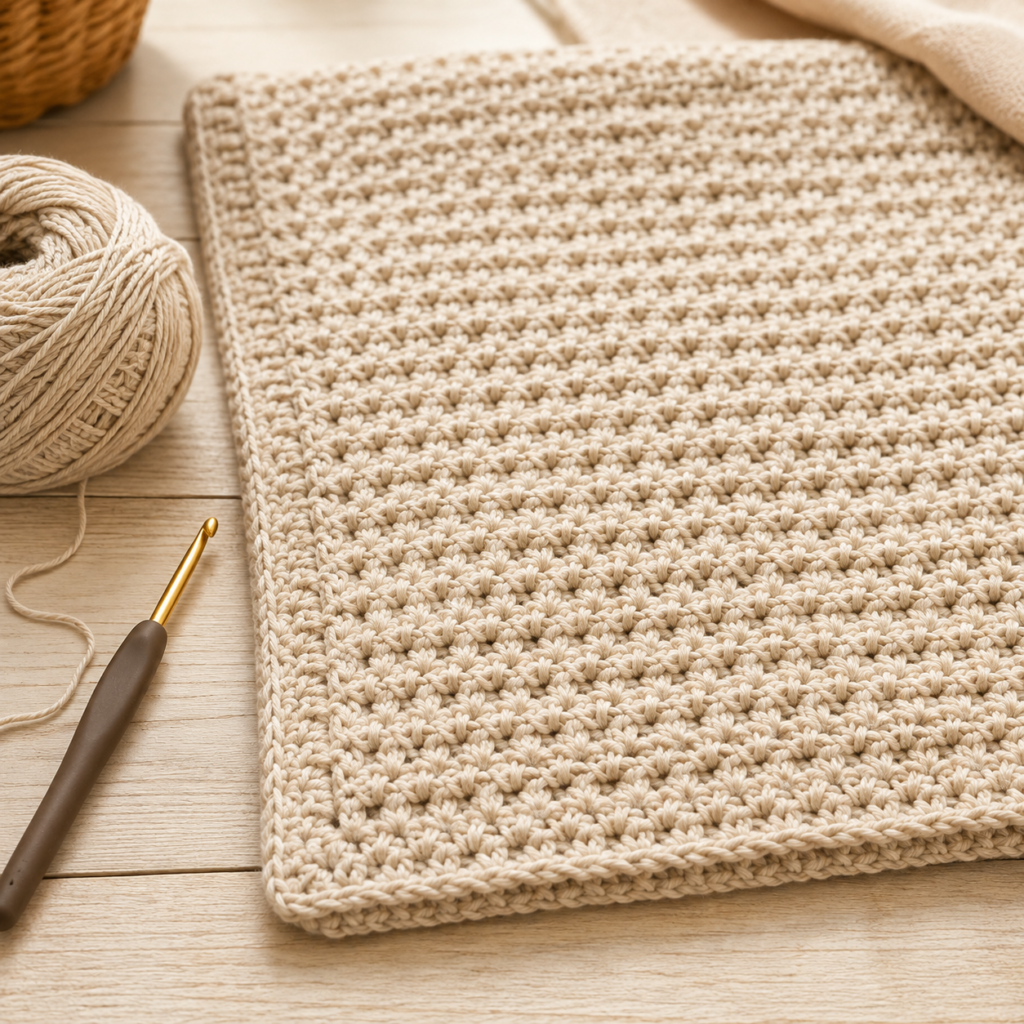
A simple single crochet blanket is one of the best projects for learning the fundamentals.
The stitch creates a dense, sturdy fabric, and because every row follows the same basic movement, you can concentrate on developing consistent tension.
Choose one color for the easiest possible version.
Cream, oatmeal, sage, dusty blue, and warm beige all work beautifully.
Best for: Absolute beginners learning basic crochet.
2. Half Double Crochet Blanket
The half double crochet is another excellent stitch for a first blanket.
It creates a fabric that is less dense than single crochet while working up more quickly.
The subtle horizontal texture also gives a simple blanket a polished appearance.
Beginner tip: Count your stitches at the end of every row until your edges become consistent.
3. Easy Double Crochet Throw
Double crochet is taller than single crochet, so it allows you to build a blanket more quickly.
A simple rectangular throw worked entirely in double crochet can be surprisingly elegant.
Add a basic border at the end for a more finished appearance.
Best for: Beginners who want to see their blanket grow quickly.
4. One-Color Granny Stitch Blanket
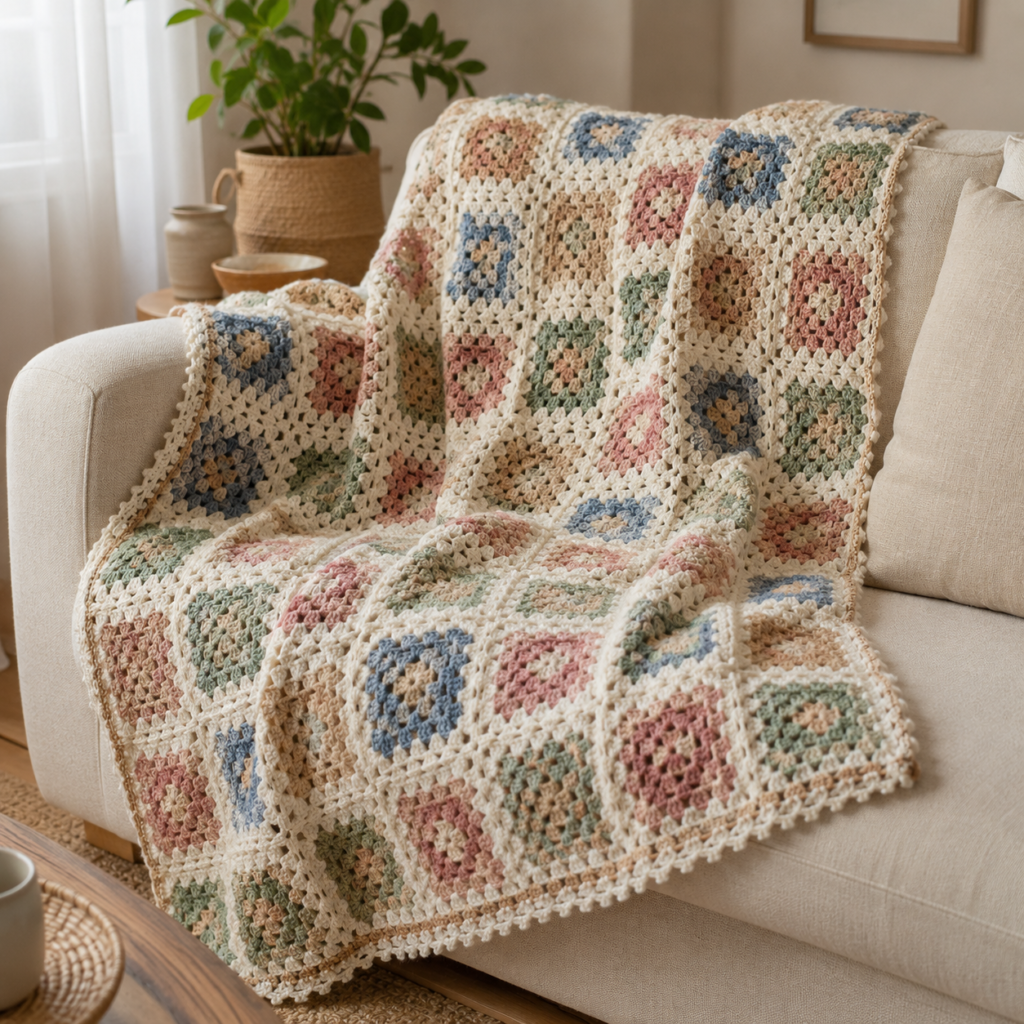
You don’t need to make individual granny squares to enjoy the classic granny look.
A granny stitch blanket can be crocheted continuously in rows.
Using a single color creates a more modern interpretation of this traditional crochet style.
Try: Cream, charcoal, sage, dusty rose, or warm taupe.
5. Classic Granny Square Blanket
Granny squares are one of the most recognizable crochet patterns.
Each square is relatively small, which can make the project feel less intimidating than working on one huge blanket.
You can make the squares identical or experiment with different color combinations.
Best for: Beginners who enjoy making smaller pieces before assembling a larger project.
6. Easy Two-Color Stripe Blanket
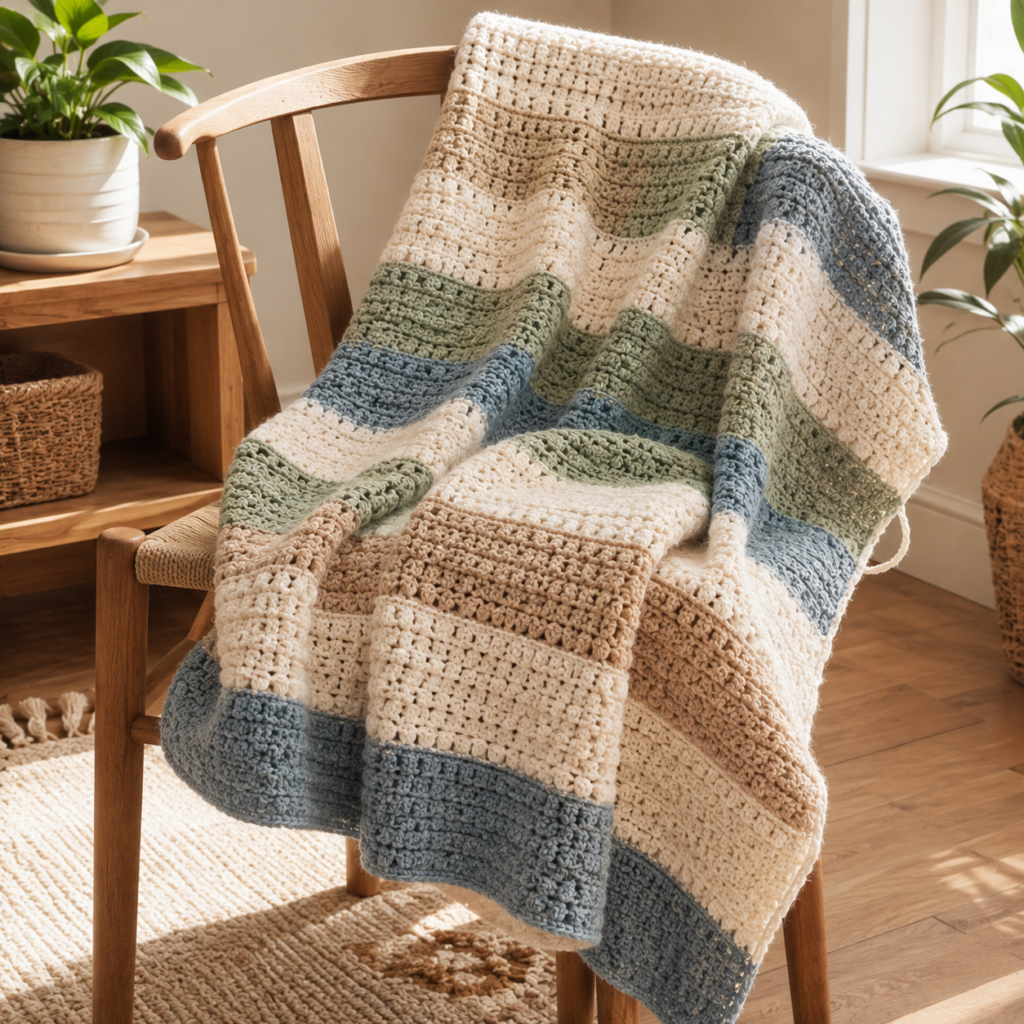
Stripes are an easy way to add visual interest without changing the stitch pattern.
Choose two colors and alternate them every few rows.
For a sophisticated look, try:
ivory + taupe
sage + cream
or
dusty blue + white.
Wide stripes are particularly beginner-friendly.
7. Moss Stitch Blanket
Moss stitch is one of the most useful beginner stitches for blankets.
Its small woven-looking texture gives a simple project a sophisticated appearance.
The stitch pattern is repetitive enough to become comfortable after a few rows.
Best for: Beginners who want texture without complicated stitches.
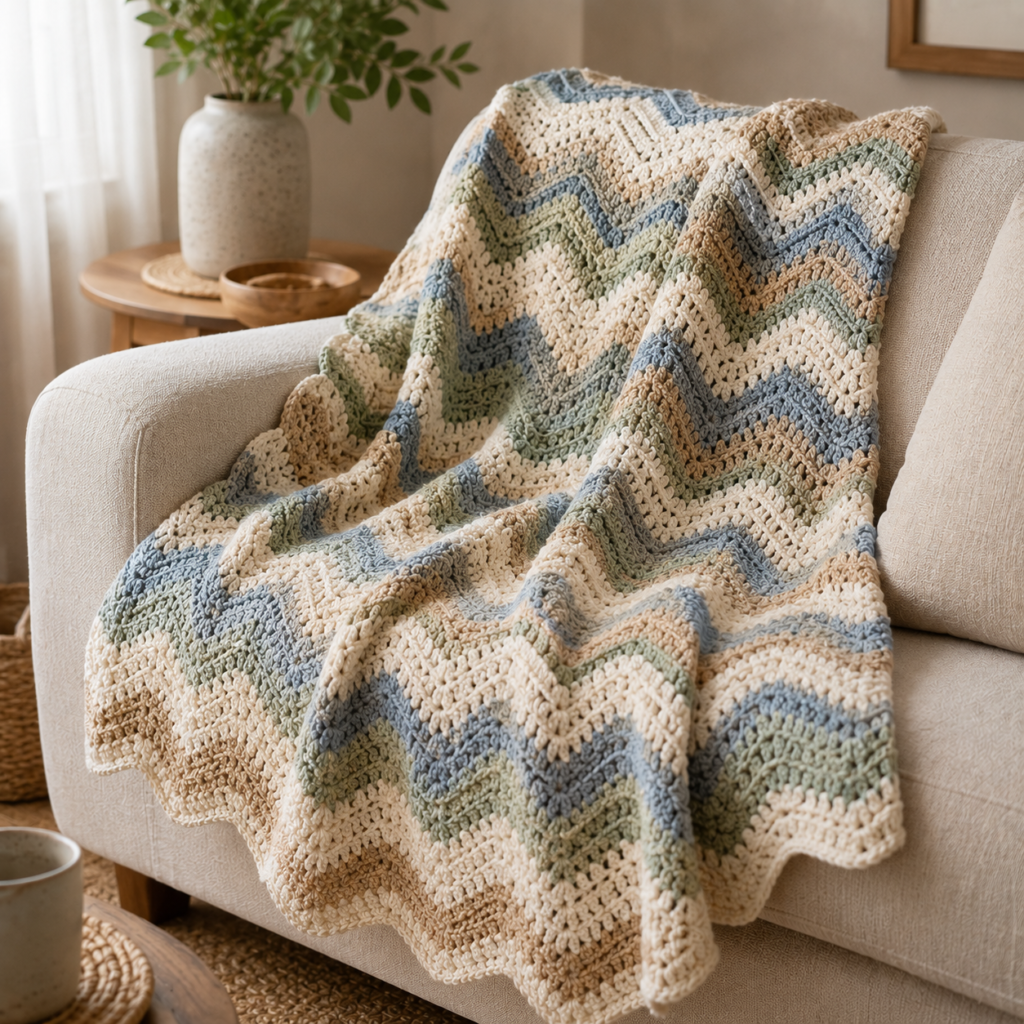
8. Simple Ripple Blanket
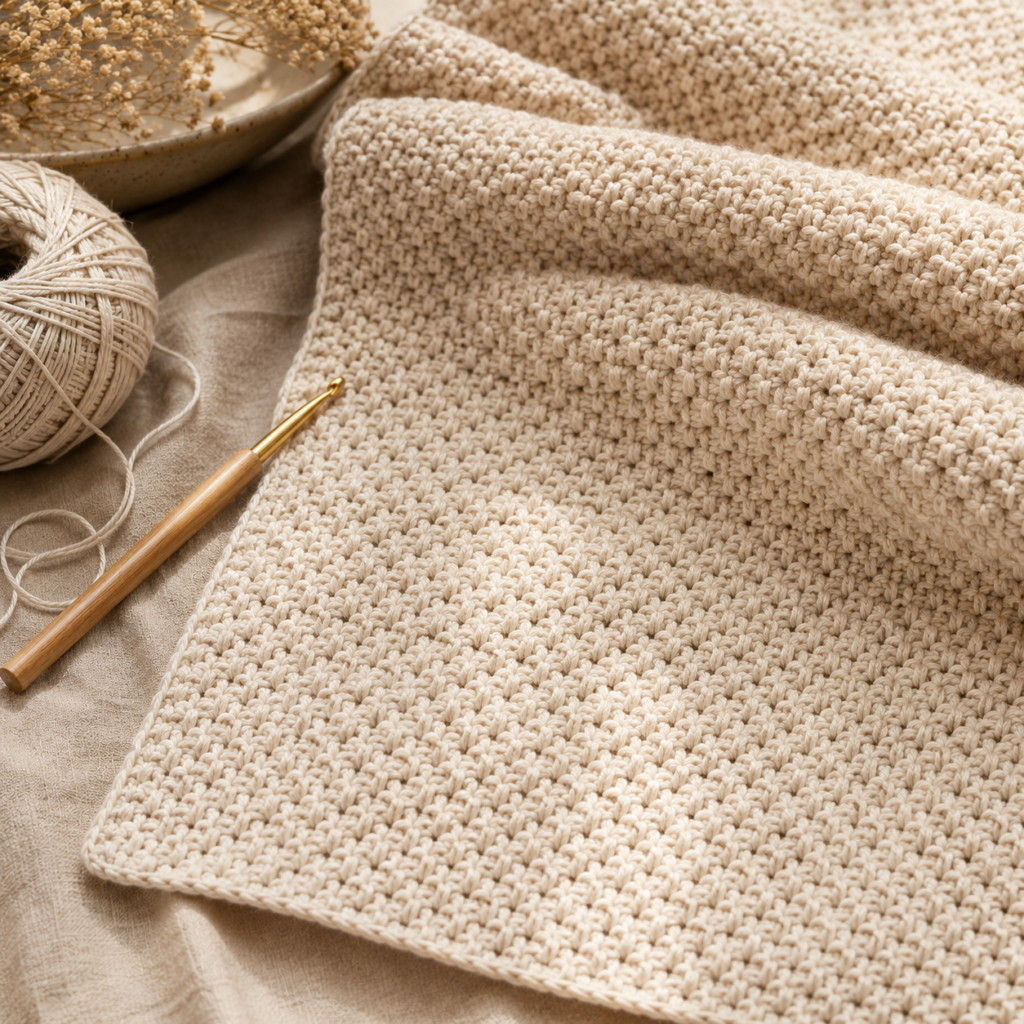
Ripple blankets create gentle waves across the fabric.
Although the finished pattern looks intricate, a basic ripple design can be very approachable once you understand where to increase and decrease.
Keep the colors simple for your first attempt.
Important: Maintain the correct stitch count so the waves stay even.
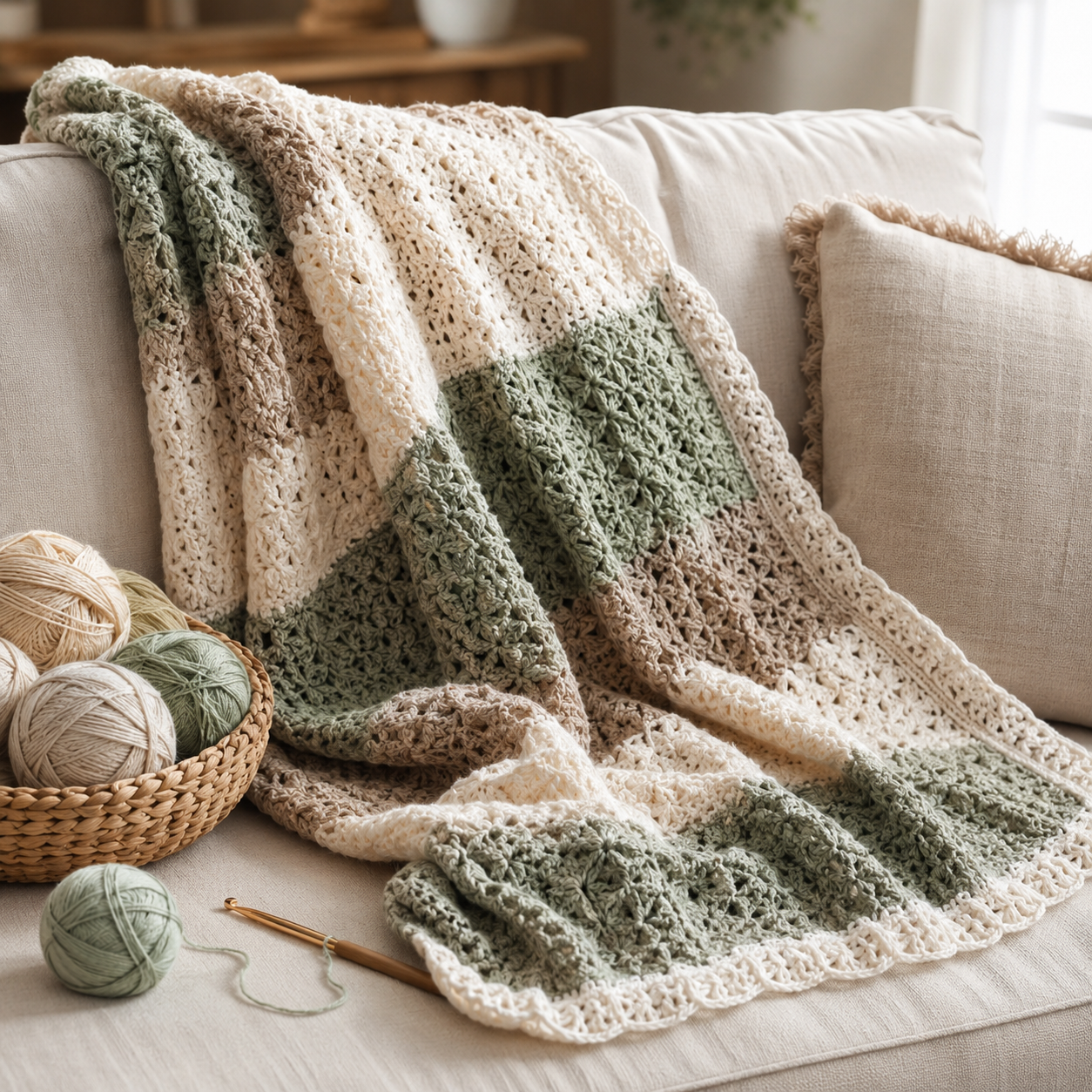
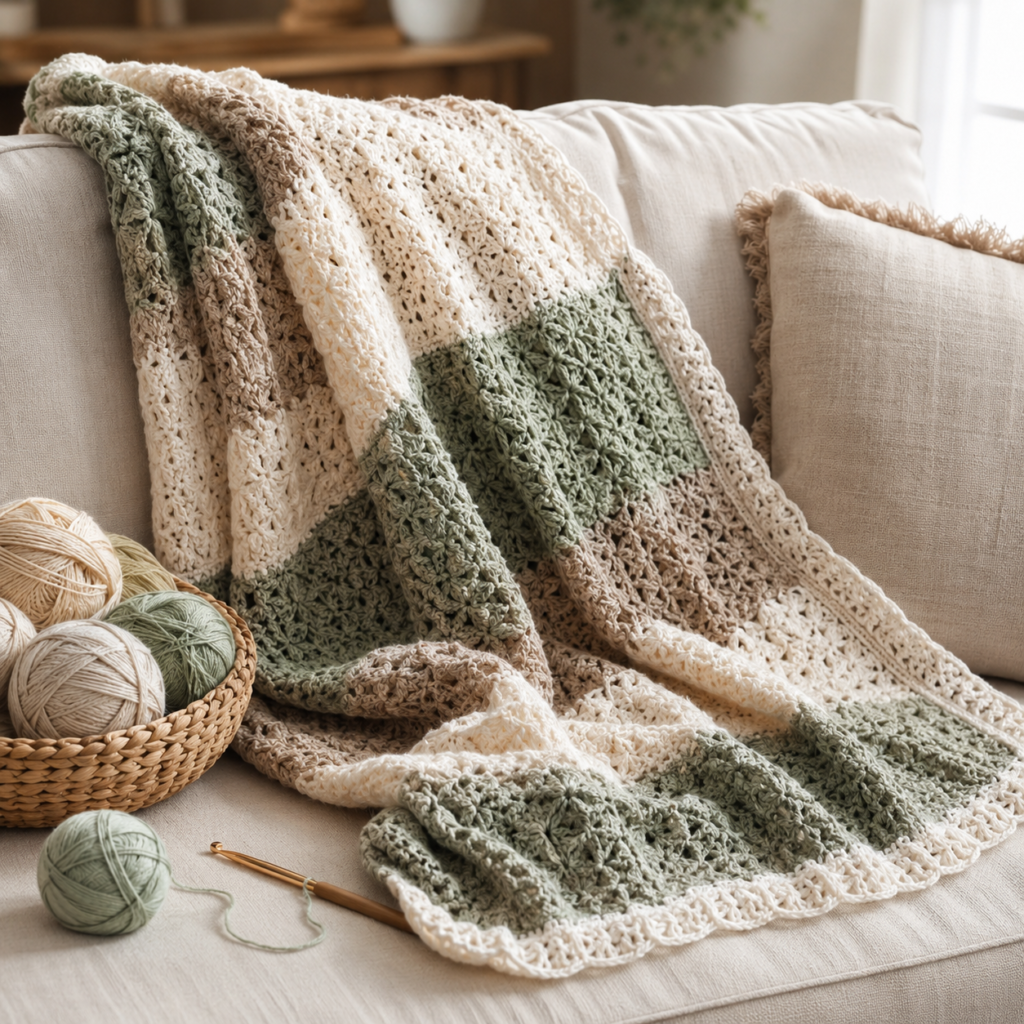
9. Modern Color-Block Blanket
Color blocking creates a contemporary look without requiring complicated crochet techniques.
Instead of changing colors frequently, work large sections in different shades.
A beautiful combination could be:
cream + camel + dusty rose
or
sage + ivory + warm gray.
This style works particularly well as a modern sofa throw.
10. Cozy Textured Stitch Blanket
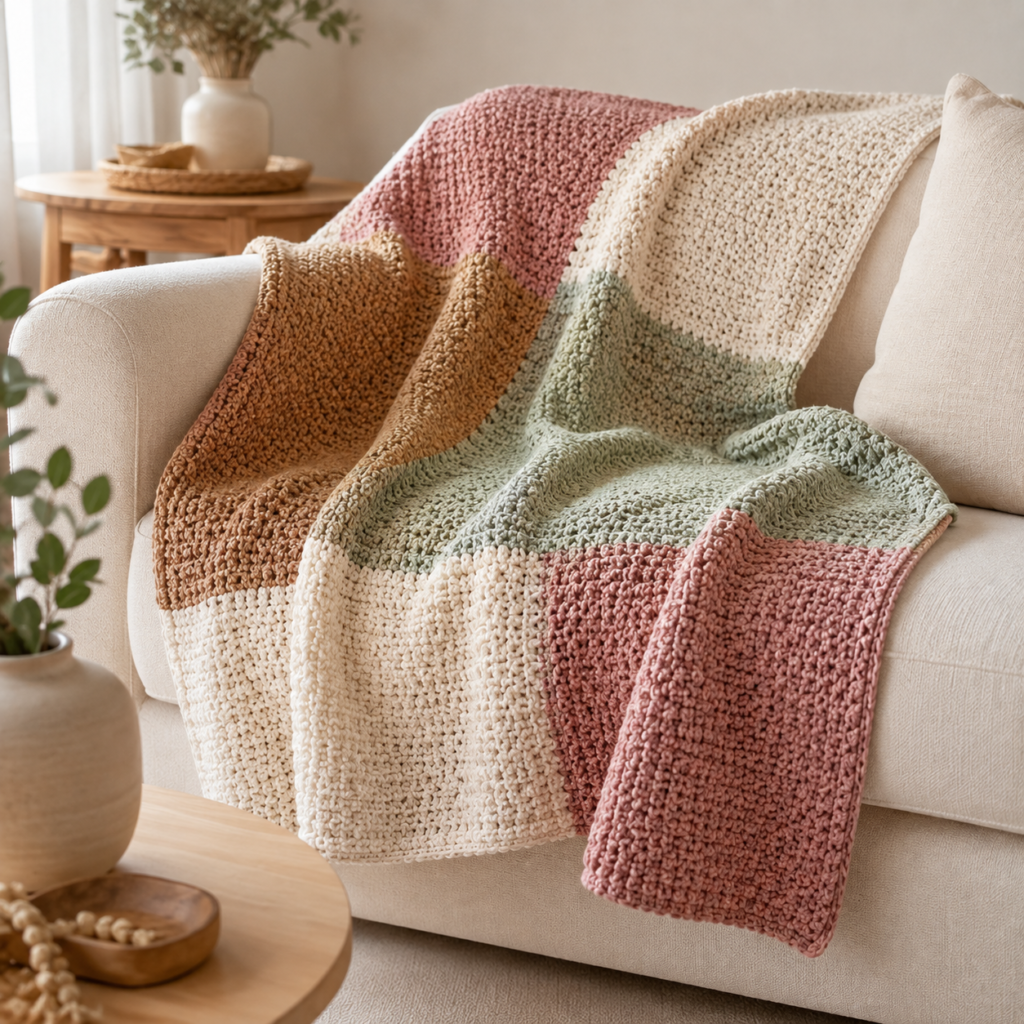
You can create impressive texture using simple combinations of basic stitches.
Alternate rows of slightly different textures to create subtle raised sections.
Choose yarn with good stitch definition so the texture remains visible.
Best for: Beginners who want their finished blanket to look more detailed.
11. Easy Baby Blanket
Baby blankets are excellent beginner projects because they’re smaller and easier to manage than large bed blankets.
Choose a soft, washable yarn and a simple stitch pattern.
Beautiful beginner-friendly colors include:
- Cream
- Sage
- Pale blue
- Dusty pink
- Butter yellow
- Soft lavender
12. Granny Stripe Blanket
A granny stripe blanket gives you the familiar look of granny crochet while allowing you to work continuously across the row.
You can use several colors for a traditional look or just two shades for a more contemporary design.
Best for: Beginners who already know basic granny stitches.
13. Corner-to-Corner Blanket
Corner-to-corner crochet, often called C2C, creates a distinctive diagonal texture.
Although C2C is often used for detailed pictures and pixel designs, a simple one-color blanket is a great place for beginners to start.
Once you understand the increase and decrease sections, the construction becomes repetitive.
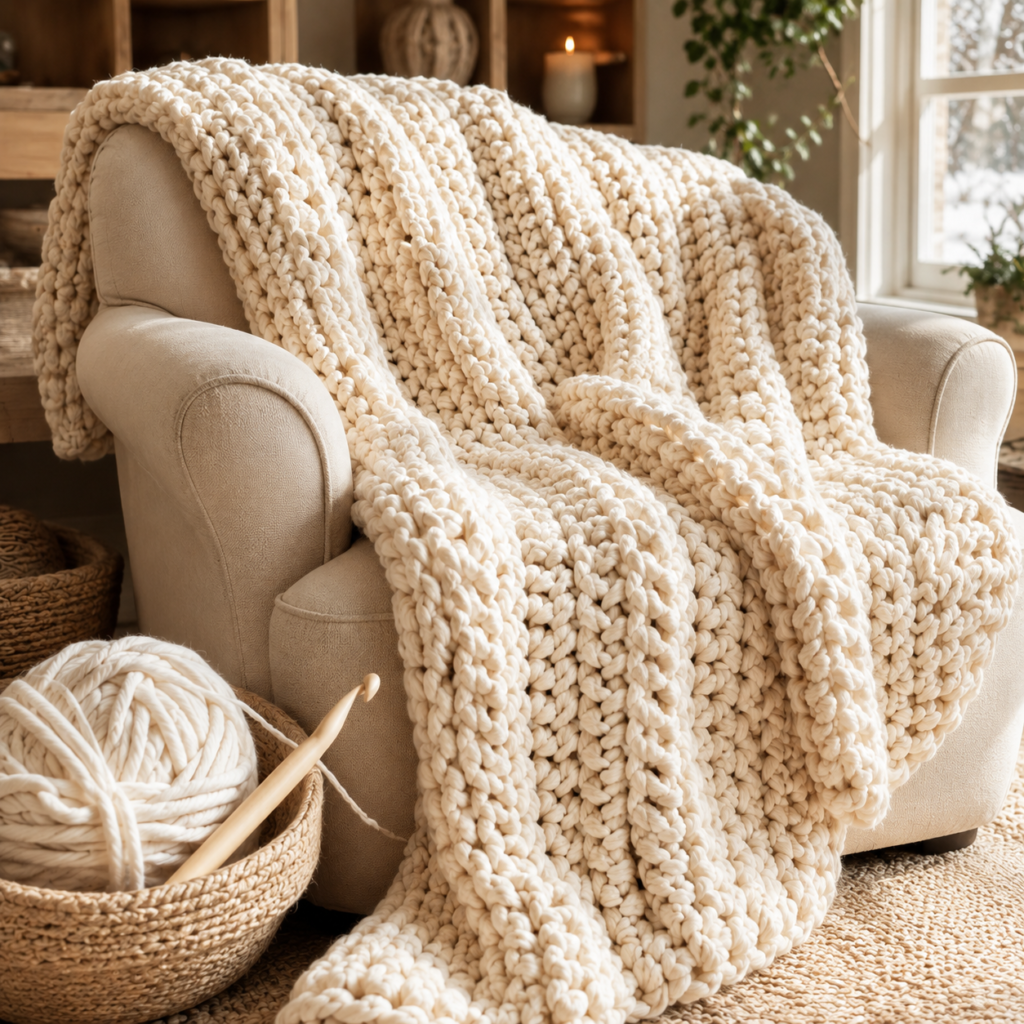
14. Chunky Crochet Blanket
A chunky blanket is a satisfying choice when you want a cozy project that doesn’t require thousands of small stitches.
Use thick yarn with a simple stitch pattern.
The yarn creates much of the visual impact, so you can keep the crochet itself uncomplicated.
Best for: Cozy winter throws and quick-feeling projects.
15. Simple V-Stitch Blanket
The V-stitch creates small open spaces that give the blanket a lighter appearance.
It’s particularly attractive for spring and summer throws.
A single color keeps the design elegant, while alternating colors can create a beautiful striped effect.
16. Beginner Shell Stitch Blanket
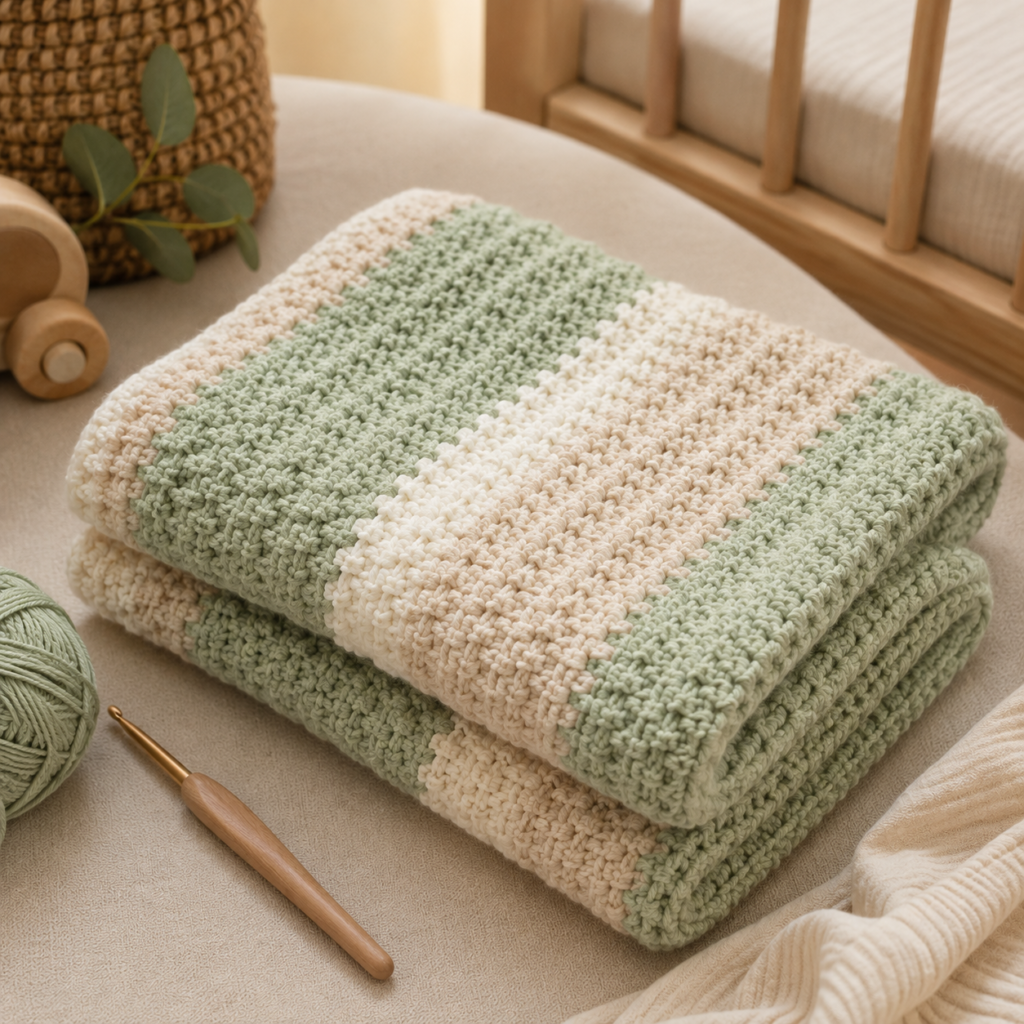
Shell stitches create fan-shaped sections of texture.
A basic shell pattern can be very approachable once you learn the repeating sequence.
Try a soft pastel palette for a feminine look or neutral colors for something more contemporary.
17. Easy Checkerboard Blanket
A checkerboard effect can be created by alternating blocks of simple stitches or colors.
The geometric appearance makes the blanket look more advanced than the actual construction.
For a modern version, use two closely related neutral colors rather than high-contrast shades.
18. Textured Stripe Blanket
Combine two simple ideas: texture and stripes.
Work several rows of one easy stitch, change colors, and repeat.
The changing texture creates visual interest without requiring complicated colorwork.
Best for: Beginners who want to practice both stitch patterns and simple color changes.
19. Farmhouse Crochet Throw
A simple stitch pattern and a neutral palette can create a beautiful farmhouse-style blanket.
Try combinations such as:
cream + taupe + charcoal
or
ivory + beige + muted sage.
Finish it with a straightforward border for a clean, cozy look.
20. Minimalist Neutral Blanket
Sometimes the most beautiful blanket is the simplest one.
Choose one neutral shade, one repeating stitch, and a clean border.
Cream, oatmeal, stone, beige, and warm gray can all create a timeless result.
This style works especially well in modern or minimalist interiors.
21. Easy Basketweave Blanket
Basketweave texture creates the appearance of woven blocks.
A beginner-friendly version can use basic front-post and back-post stitches.
The finished blanket is thick and cozy, making it particularly suitable for colder months.
Beginner tip: Practice the stitch pattern on a small swatch before starting the blanket.
22. Simple Diagonal Stripe Blanket
Diagonal stripes create movement without requiring complicated shaping.
You can create the effect with simple color changes or a beginner-friendly diagonal stitch pattern.
Use two or three coordinating colors to keep the design easy to manage.
23. Lightweight Summer Crochet Blanket
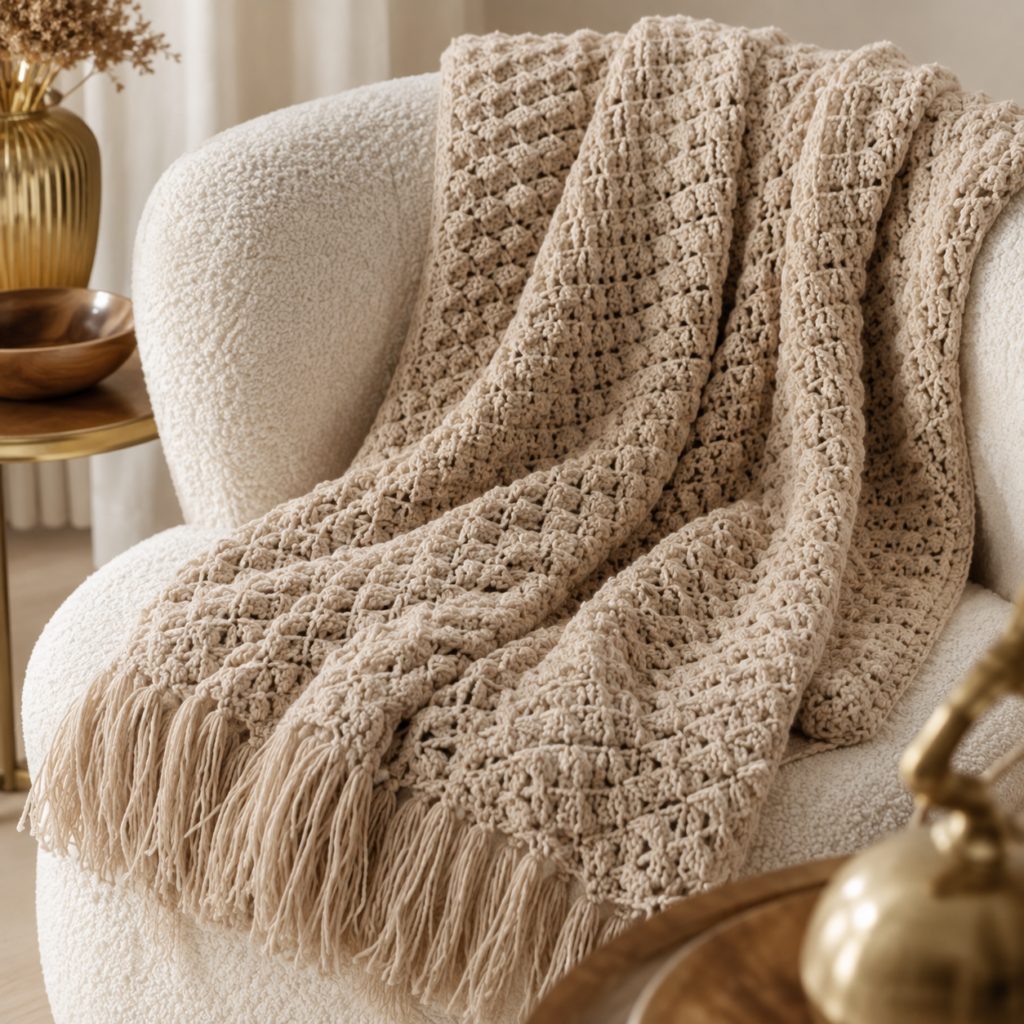
Blankets aren’t only for winter.
For a lightweight summer throw, choose breathable yarn and an open stitch pattern such as V-stitch or granny-style crochet.
Soft white, cream, pale blue, sage, and light beige create a fresh seasonal palette.
24. Easy Lap Blanket
A lap blanket is a great alternative if a full-size throw feels too ambitious.
It’s smaller, faster to manage, and gives you plenty of practice with your chosen stitch.
A lap blanket is also useful for a reading chair, sofa, bedroom chair, or cozy evening at home.
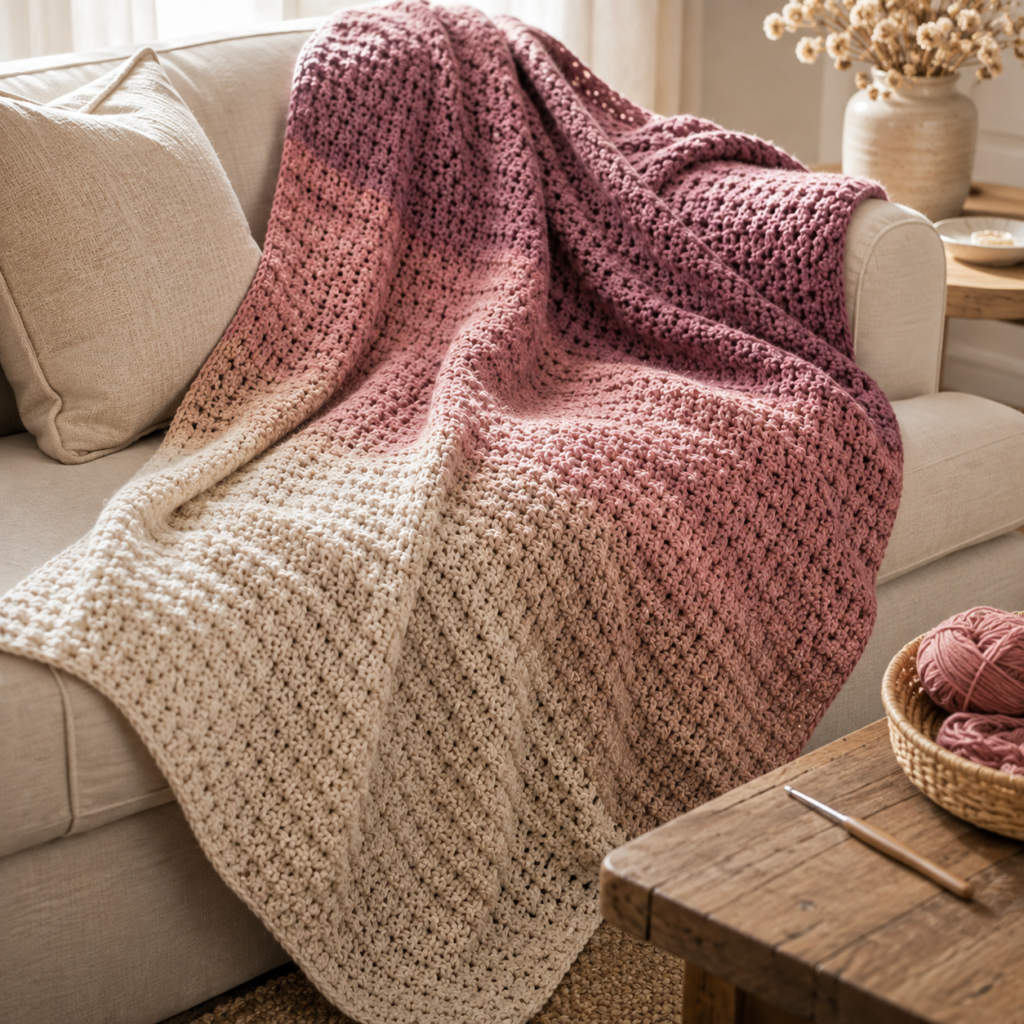
25. Ombre Crochet Blanket
An ombre or gradient yarn can create beautiful color transitions without requiring you to change colors manually.
Pair the yarn with a simple stitch so the gradual color change remains the star of the project.
This is a particularly easy way to create a visually impressive beginner blanket.
26. Blanket With a Simple Contrasting Border
The main body of your blanket can be completely simple.
Then add a contrasting border to give the finished project a more polished appearance.
For example:
cream blanket + taupe border
or
sage blanket + ivory border.
A border is also a useful way to create cleaner-looking edges.
27. Easy Three-Color Blanket
If you’re comfortable with basic color changes, try a three-color design.
Choose one main shade and two complementary colors.
For example:
cream + dusty rose + muted brown
or
ivory + sage + soft blue.
Keep the stitch pattern simple so you don’t have to concentrate on too many things at once.
28. Simple Floral Granny Square Blanket
If you’ve already mastered basic granny squares, you can take the idea one step further with floral-inspired centers.
Keep the outer rounds simple and use a consistent color palette throughout.
This creates a cheerful handmade look without requiring complicated blanket construction.
Best for: Beginners who are comfortable making and joining basic squares.
29. Easy Crochet Throw With a Ribbed Border
A simple blanket can look much more finished with a structured border.
Work the main body in an easy repeating stitch, then add a few rounds around the edges using a ribbed or textured stitch.
The contrast between the simple center and defined border creates a polished result.
30. Beginner’s First Full-Size Blanket
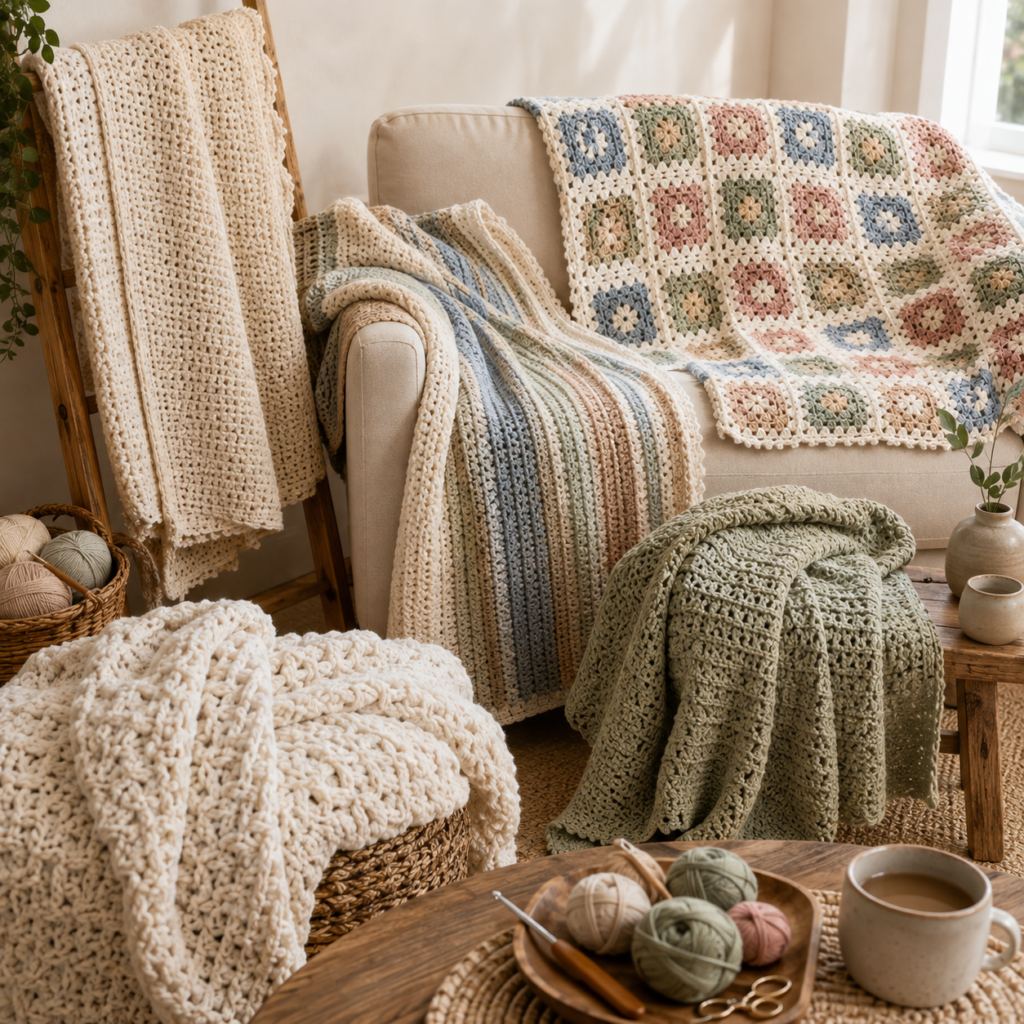
If you’re completely new to crochet, don’t feel pressured to choose a complicated pattern.
A one-color rectangular blanket using a simple repeating stitch is often the best first project.
You’ll practice:
- Making a foundation chain
- Working basic stitches
- Turning rows
- Maintaining stitch counts
- Controlling tension
- Keeping straight edges
- Finishing a large project
Once you’ve completed it, you’ll have the confidence to try stripes, granny squares, textured stitches, and more advanced designs.
What Is the Easiest Crochet Stitch for a Blanket?
Several crochet stitches work particularly well for beginners.
Single Crochet
Simple and sturdy, with a dense finished fabric.
Half Double Crochet
A little taller than single crochet and faster to work.
Double Crochet
Works up quickly and is excellent for larger blankets.
Moss Stitch
Creates subtle texture while using simple movements.
Granny Stitch
A classic choice that becomes highly repetitive once you learn the pattern.
For your very first blanket, single crochet, half double crochet, or moss stitch are excellent places to start.
What Is the Easiest Crochet Blanket Pattern for a Beginner?
The simplest option is usually a rectangular blanket worked in one repeating stitch and one color.
There is no complicated shaping to worry about.
You make the foundation chain, work across the row, turn your project, and repeat until the blanket reaches the desired size.
This lets you concentrate on your technique rather than constantly checking complicated instructions.
What Yarn Should Beginners Use for a Crochet Blanket?
For your first blanket, choose yarn that makes the stitches easy to see.
A medium-weight yarn is often a comfortable starting point because it isn’t too thin and doesn’t require an extremely large hook.
Look for yarn that is:
- Easy to handle
- Not excessively fuzzy
- Comfortable against the skin
- Easy to wash
- Appropriate for your intended project
Very fuzzy or novelty yarn can make it difficult for beginners to see individual stitches, so it’s usually better saved for later projects.
How Much Yarn Do You Need for a Crochet Blanket?
There isn’t one universal amount.
Yarn requirements depend on:
- Blanket dimensions
- Yarn weight
- Crochet hook size
- Stitch pattern
- Your individual tension
- Border design
A small baby blanket might require only a few skeins, while a large bed-size blanket can require considerably more.
Always check the pattern’s recommended yardage before purchasing yarn.
If you’re designing your own blanket, make a gauge swatch first and estimate your yarn requirements from there.
It’s also wise to buy enough yarn from the same dye lot for the entire project whenever possible.
How Long Does It Take to Crochet a Blanket?
The time required varies enormously.
A small blanket made with chunky yarn may progress quickly, while a large blanket made with a detailed stitch pattern can take considerably longer.
Your crochet speed matters too.
Don’t compare your progress with someone who has been crocheting for years.
For your first blanket, the goal isn’t speed.
The goal is learning, practicing, and enjoying the process.
How Do You Keep a Beginner Crochet Blanket Straight?
Uneven edges are one of the most common frustrations for new crocheters.
The good news is that they’re usually preventable.
Count your stitches
Check the number at the end of each row.
Identify the first and last stitch
These can be easy to miss, especially with taller stitches.
Use stitch markers
A marker can help you identify important stitches and keep your edges consistent.
Don’t crochet too tightly
Extremely tight tension can make the project difficult to work and can affect its final size.
Practice first
Make a small swatch before starting the actual blanket.
A few minutes of practice can save hours of frustration later.
Easy Crochet Blanket Ideas by Skill Level
Absolute Beginner
Start with:
- Single crochet blanket
- Half double crochet blanket
- Simple double crochet throw
- One-color granny stitch
- Easy baby blanket
Beginner
Once you’re comfortable with basic stitches, try:
- Moss stitch
- Ripple blanket
- V-stitch
- Shell stitch
- Color-block blanket
- Granny stripe
Confident Beginner
When you’re ready for a little more variety, try:
- C2C blanket
- Basketweave
- Ombre blanket
- Three-color designs
- Floral granny squares
- Textured borders
You don’t have to rush through the levels.
Crochet is a skill that becomes easier through repetition.
Best Beginner Crochet Blankets for Gifts
A handmade blanket can be an incredibly thoughtful gift because it represents hours of time and care.
Baby Shower
Choose a small, soft baby blanket in a washable yarn.
Housewarming
A neutral throw in cream, beige, taupe, or sage can complement many interiors.
Birthday
Choose colors based on the recipient’s personality or favorite shades.
Wedding
A timeless neutral blanket can become a meaningful addition to a couple’s home.
Holiday Gift
A chunky winter throw makes a particularly cozy handmade present.
How to Choose Your First Crochet Blanket
If you’re still unsure which pattern to make, start by asking yourself three questions.
1. How much crochet experience do I have?
If you’re completely new, choose a single repeating stitch.
2. How much time do I want to spend?
A lap blanket or baby blanket will usually feel more manageable than a large bed-size project.
3. What kind of finished look do I want?
For a minimalist blanket, choose one color.
For something colorful, try stripes or granny squares.
For texture, choose moss stitch, basketweave, or a simple textured pattern.
Choosing a project that matches both your skill level and your style makes it much more likely that you’ll actually finish it.
Common Beginner Mistakes to Avoid
Your first crochet blanket doesn’t have to be perfect.
But avoiding a few common mistakes can make the process much easier.
Starting with a pattern that’s too complicated
Choose a design that lets you practice rather than constantly struggle.
Ignoring gauge
If the finished size matters, make a gauge swatch before starting.
Losing track of stitches
A small change in stitch count can gradually make your blanket wider or narrower.
Using difficult yarn
Fuzzy or very dark yarn can make individual stitches difficult to see.
Skipping the blocking or finishing instructions
Depending on the pattern and yarn, blocking can help even out the finished blanket and improve its shape.
Final Thoughts
Making your first crochet blanket is less about creating a perfect piece and more about discovering how enjoyable crochet can be.
You don’t need complicated stitches or advanced techniques to make something beautiful.
A simple single crochet blanket, a classic granny design, an easy stripe, a textured neutral throw, or a colorful baby blanket can all become treasured handmade pieces.
The key is to start with a pattern that matches your current skill level.
Choose yarn that is easy to work with, keep your first design simple, count your stitches regularly, and give yourself permission to make mistakes.
Your tension will improve.
Your stitches will become more consistent.
And before you know it, you’ll have a finished blanket made entirely by you.
Which of these 30 easy crochet blanket patterns would you try first? Save this list for your next crochet project and come back whenever you need beginner-friendly crochet inspiration.