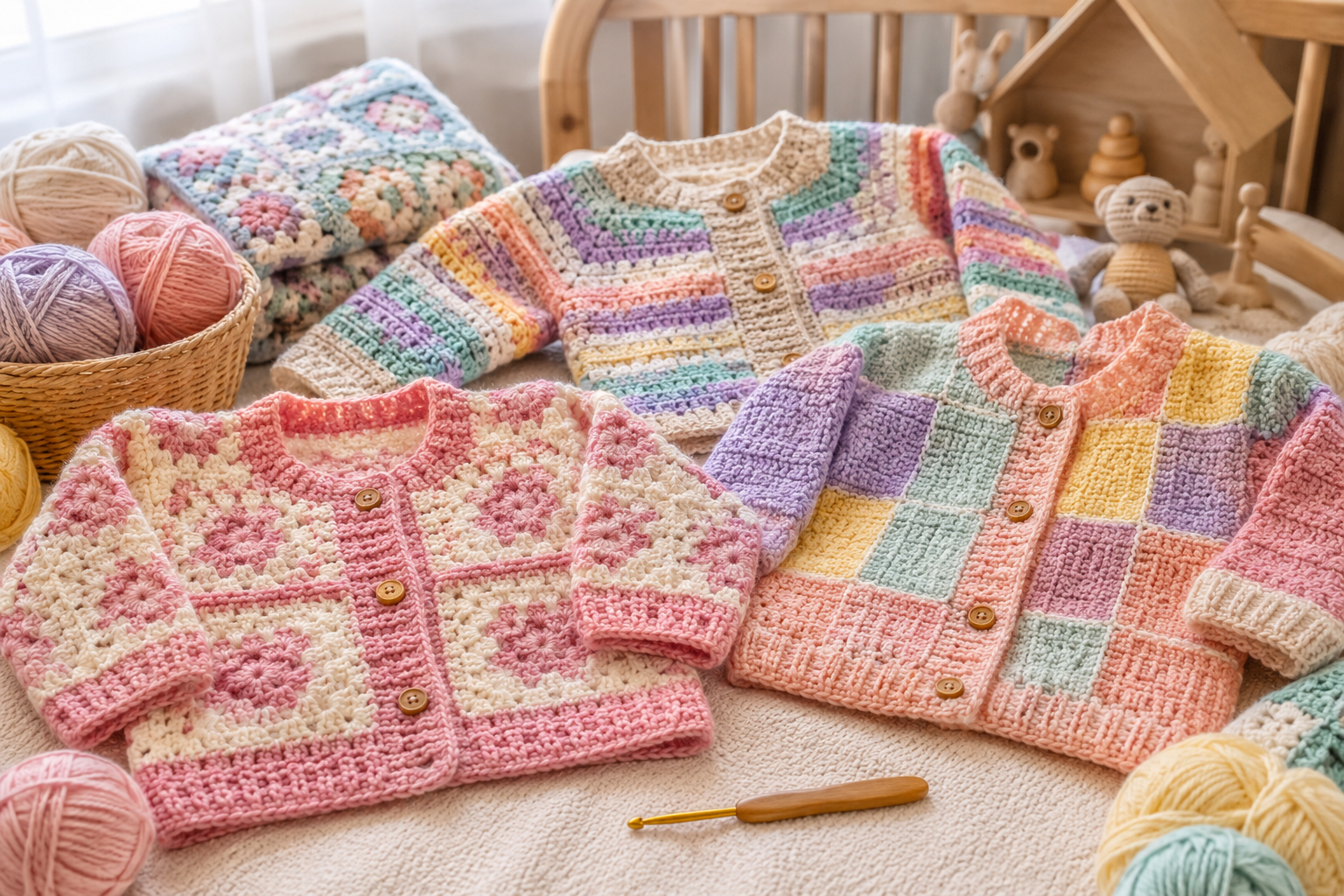
There is something special about a handmade crochet sweater for a baby. A tiny cardigan made with soft yarn, cheerful colors and thoughtful details can become more than just clothing—it can become a keepsake.
From colorful granny-square baby cardigans to simple striped pullovers and playful patchwork sweaters, crochet gives you endless ways to create handmade baby clothes that feel unique.
The good news is that baby sweaters are also excellent projects for crocheters who want to start making garments. They are smaller than adult sweaters, require less yarn, and give you plenty of opportunities to practice shaping, joining, color changes and finishing.
In this guide, you’ll find 31 crochet baby sweater and cardigan ideas, followed by practical information about yarn, sizing, gauge, construction, color planning and beginner-friendly pattern formulas.
Whether you’re making something for your own little one, preparing a baby shower gift, or simply looking for your next crochet project, there’s an idea here to inspire you.
Floral Cardigan Pick
Looking for a feminine cardigan with a romantic touch? This Margovil Button Down Flower Appliqué Sweater is a beautiful choice for creating a soft, feminine look. Pair it with jeans for an effortless everyday outfit, or style it with a skirt for a more polished look.
Shop this similar floral cardigan →
31 Crochet Baby Sweater & Cardigan Ideas
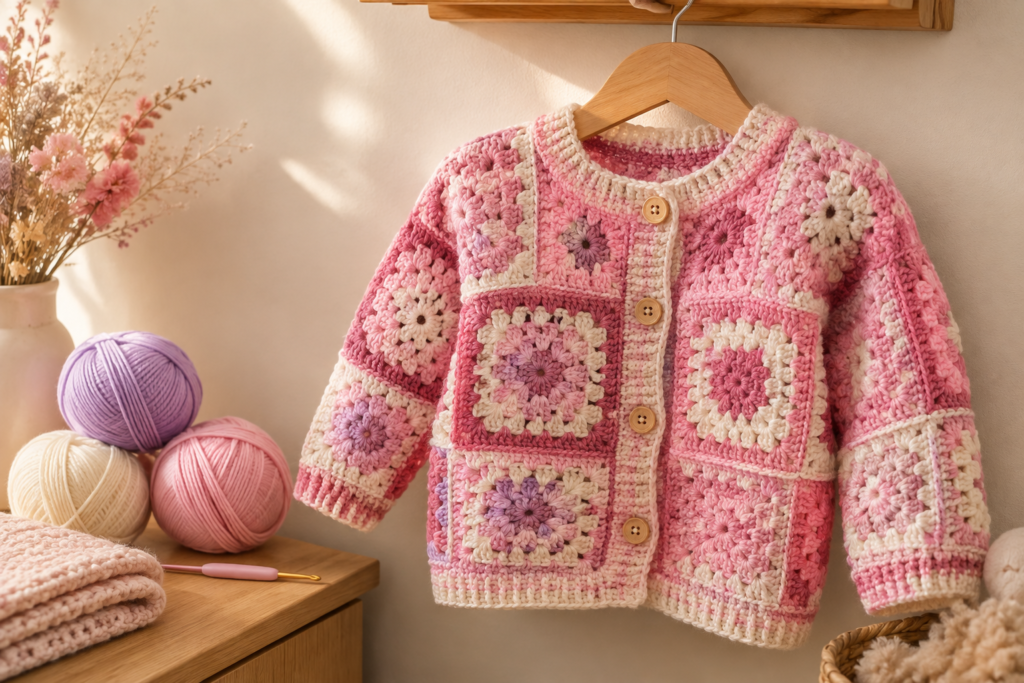
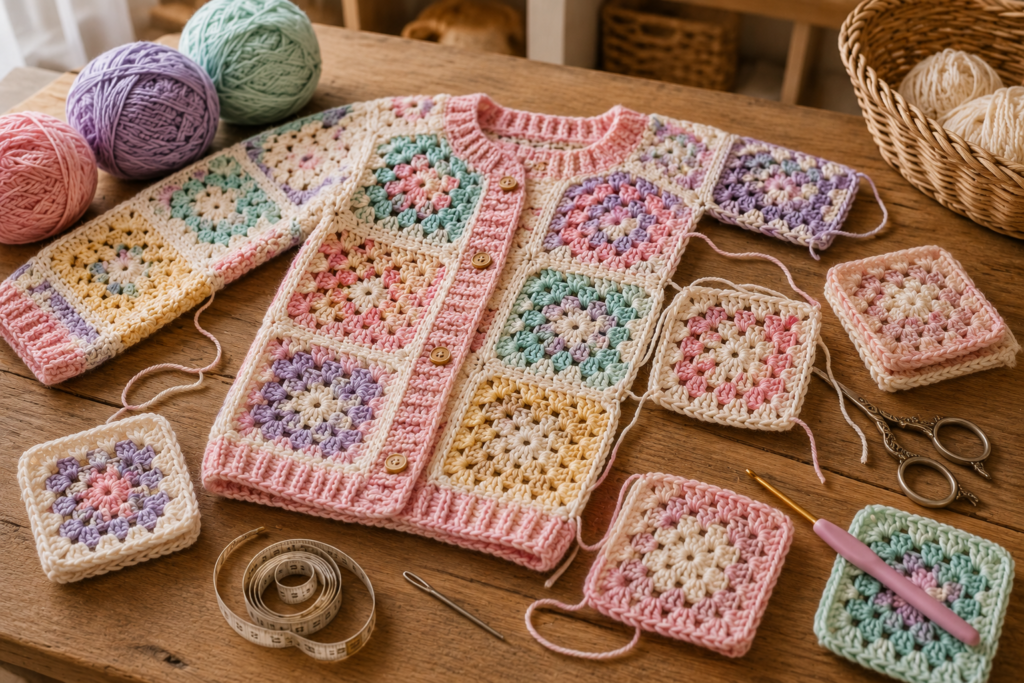
1. Pink Granny-Square Baby Cardigan
This soft pink cardigan is a perfect example of how beautiful a simple granny-square design can become.
Combine several shades of pink with cream or white to create a soft floral-inspired effect.
Try this color palette:
- Baby pink
- Rose pink
- Bright pink
- Cream
- White
Add a ribbed-style crochet border around the neckline, cuffs and bottom edge for a polished finish.
Difficulty: Beginner to intermediate
Best technique: Granny squares + joining
2. Colorful Striped Baby Sweater
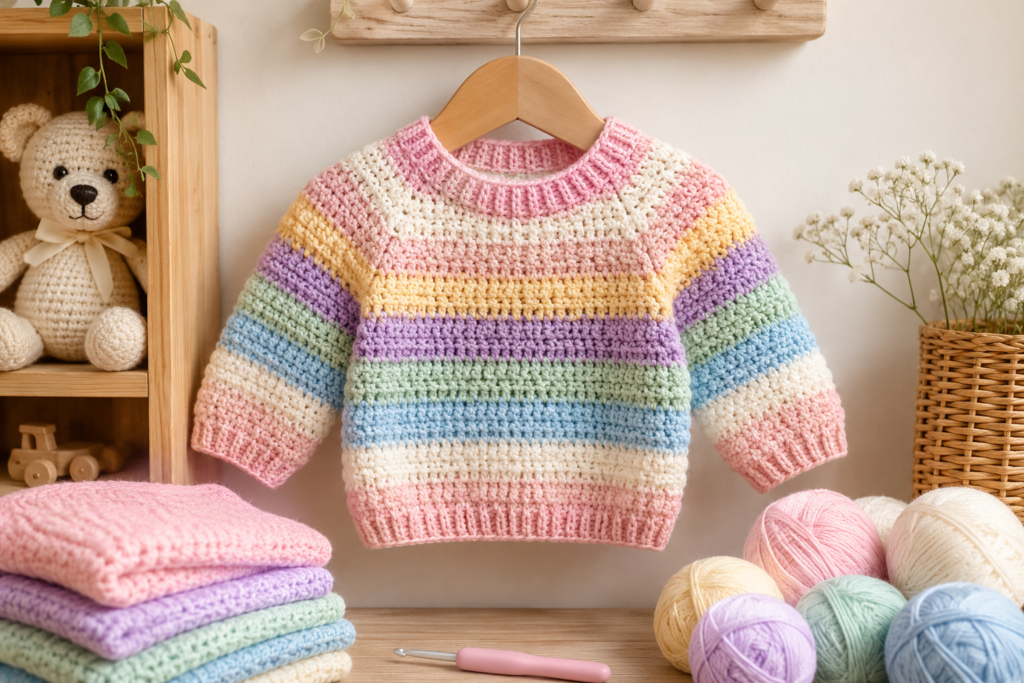
A striped sweater is one of the easiest ways to make a colorful baby garment.
Instead of complicated motifs, simply alternate rows of different colors.
Try:
Pink → white → yellow → lavender → mint → white
For a more sophisticated look, keep the stripe widths consistent.
Difficulty: Beginner
Best for: Using leftover yarn
3. Colorful Patchwork Baby Cardigan
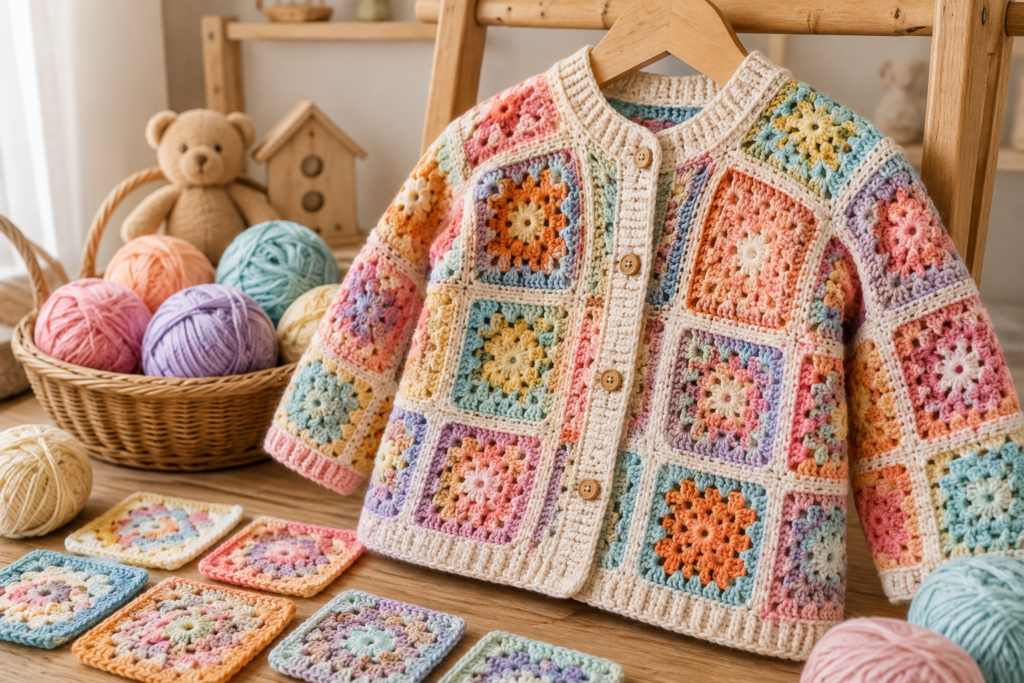
If you love the playful look of colorful crochet, a patchwork cardigan is a fantastic choice.
Make individual squares using different colors and join them into front panels, a back panel and sleeves.
A consistent cream or white border can help all the different colors look intentional.
Difficulty: Intermediate
Best for: Scrap yarn
4. Classic Cream Baby Cardigan
Not every baby sweater needs bright colors.
A cream, ivory or oatmeal cardigan creates a timeless handmade look.
Pair it with:
- Wooden buttons
- Simple ribbed cuffs
- A clean neckline
- Subtle textured stitches
This is especially beautiful as a baby shower gift.
Difficulty: Beginner
5. Pastel Rainbow Baby Sweater
Use soft pastel colors instead of strong rainbow shades.
Try:
- Blush pink
- Baby blue
- Lavender
- Mint
- Butter yellow
- Cream
The result is colorful without looking overwhelming.
Difficulty: Beginner
6. Daisy Granny-Square Cardigan
Add a small flower to the center of each granny square.
A particularly pretty combination is:
Pink petals + cream background + darker pink center
You can use the same flower throughout the cardigan or alternate several flower colors.
Difficulty: Intermediate
7. Simple Top-Down Baby Sweater
A top-down sweater is an excellent project if you want to learn garment construction.
Instead of making several large pieces separately, you begin around the neckline and gradually build the sweater downward.
One major advantage is that you can check the fit while you’re working.
Difficulty: Beginner to intermediate
8. Button-Front Baby Cardigan
A button-front cardigan is practical because it opens completely.
This makes it easier to put on and remove than a pullover.
Choose three or four attractive buttons and make sure they are securely attached.
Difficulty: Beginner to intermediate
9. Granny-Square Sleeve Cardigan
Want a more unusual design?
Keep the body relatively simple and use colorful granny squares for the sleeves.
This creates a statement piece without requiring the entire cardigan to be made from motifs.
Difficulty: Intermediate
10. Modern Color-Block Sweater
Instead of narrow stripes, divide the sweater into large blocks of color.
For example:
Cream body + pink sleeves + lavender cuffs
or:
Yellow body + cream sleeves + pink neckline
This style is simple but looks modern.
Difficulty: Beginner
11. Rainbow Granny-Stitch Pullover
Classic granny stitches are perfect for beginners who want texture without complicated stitch combinations.
Use one neutral color between brighter sections to keep the design balanced.
Difficulty: Beginner
12. Soft Pastel Patchwork Cardigan
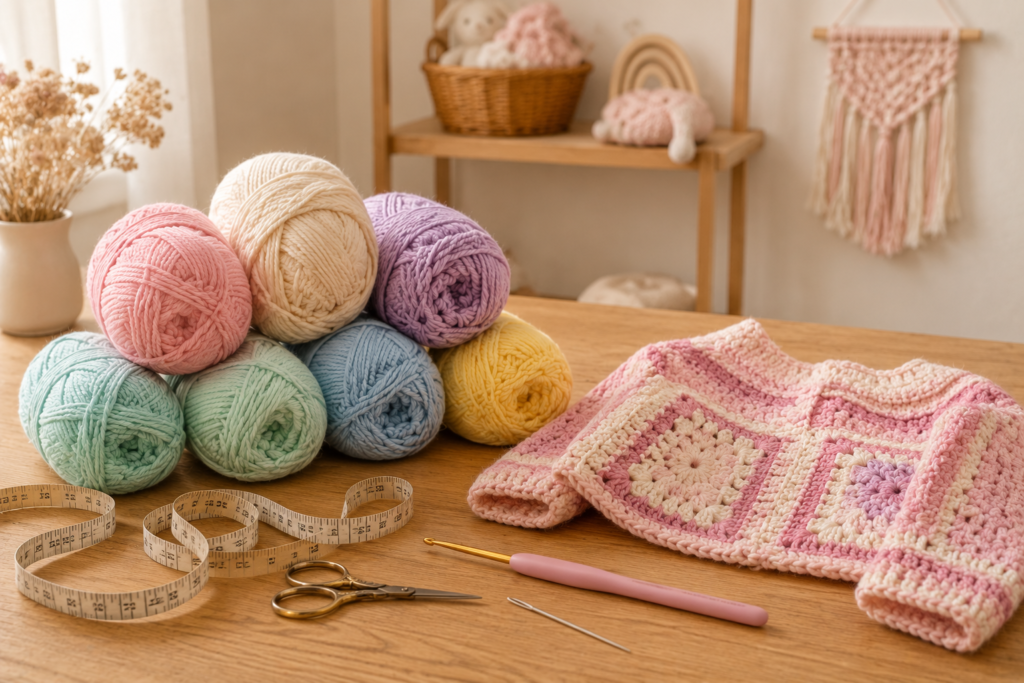
Use several pastel shades and repeat them throughout the cardigan.
A good palette is:
Pink + lavender + mint + yellow + cream + baby blue
Give every square a cream border for a coordinated appearance.
Difficulty: Intermediate
13. Striped Raglan Baby Sweater
Raglan construction is another excellent option for beginners.
The sweater grows from the neckline, with increases creating the shoulder and armhole shape.
Add stripes as you go for an easy colorful design.
Difficulty: Beginner to intermediate
14. Rainbow Patchwork Cardigan
Make every square colorful but use one consistent joining color.
For example:
Multicolor squares + cream joining
This technique is one of the easiest ways to make a colorful patchwork cardigan look professionally coordinated.
Difficulty: Intermediate
15. Teddy Bear Baby Cardigan
Add a cute teddy bear motif to a simple cardigan.
You can use:
- Bear ears on a hood
- Small bear appliqués
- Embroidered facial details
Keep the base neutral so the bear details stand out.
Difficulty: Intermediate
16. Hooded Crochet Baby Sweater
A hood can turn a simple sweater into a particularly cozy piece.
Make the body first, then work the hood from the neckline and seam the top.
For a playful version, add small rounded ears.
Difficulty: Intermediate
17. Classic Granny-Stitch Baby Pullover
The granny stitch creates an attractive textured fabric using repeating clusters.
It works especially well when you want a traditional handmade appearance.
Try a cream base with colorful stripes.
Difficulty: Beginner
18. Floral Baby Cardigan
Crochet small flowers separately and attach them to a simple cardigan.
Good places for flowers include:
- Front panels
- Sleeves
- Pockets
- Lower corners
Keep the appliqués securely attached.
Difficulty: Beginner to intermediate
19. Strawberry-Inspired Baby Sweater
Create a playful fruit-inspired design using:
Pink + red + cream + green
Small green crochet leaves can be added around the neckline or cuffs.
Difficulty: Intermediate
20. Sunshine Baby Cardigan
Yellow and cream make an adorable combination.
Try small sun motifs or simply use yellow as an accent color around the edges.
Difficulty: Beginner
21. Ocean-Inspired Baby Sweater
For a cooler palette, combine:
- Baby blue
- Cream
- Seafoam
- Soft navy
This works particularly well for lightweight spring and summer sweaters.
Difficulty: Beginner
22. Checkerboard Baby Cardigan
A checkerboard pattern can look surprisingly modern.
Try:
Cream + dusty pink
for a soft version, or:
Cream + black
for a more graphic style.
Difficulty: Intermediate
23. Mini Granny-Square Sweater
Instead of using large granny squares, make smaller motifs.
This creates a detailed patchwork effect and gives you more opportunities to experiment with color.
Difficulty: Intermediate
24. Cozy Oversized Baby Cardigan
A relaxed cardigan can be adorable for layering.
However, don’t simply make a baby garment extremely oversized. Keep the neckline and armholes comfortable and appropriate.
Difficulty: Beginner to intermediate
25. Scalloped-Edge Baby Cardigan
Keep the body simple and make the edging the main decorative feature.
Add scallops around:
- Hem
- Sleeves
- Front opening
Difficulty: Beginner
26. Flower Patchwork Sweater
Combine simple squares with floral motifs.
This is an excellent project if you have small amounts of yarn in several colors.
Difficulty: Intermediate
27. Neutral Boho Baby Cardigan
For a more natural aesthetic, use:
Cream + beige + oatmeal + soft brown
Add wooden buttons and simple textured stitches.
Difficulty: Beginner
28. Two-Tone Baby Pullover
Choose one main color and one accent.
Examples:
Pink + cream
Lavender + white
Mint + beige
Yellow + cream
Use the accent color on the cuffs, neckline and hem.
Difficulty: Beginner
29. Granny-Square Baby Vest
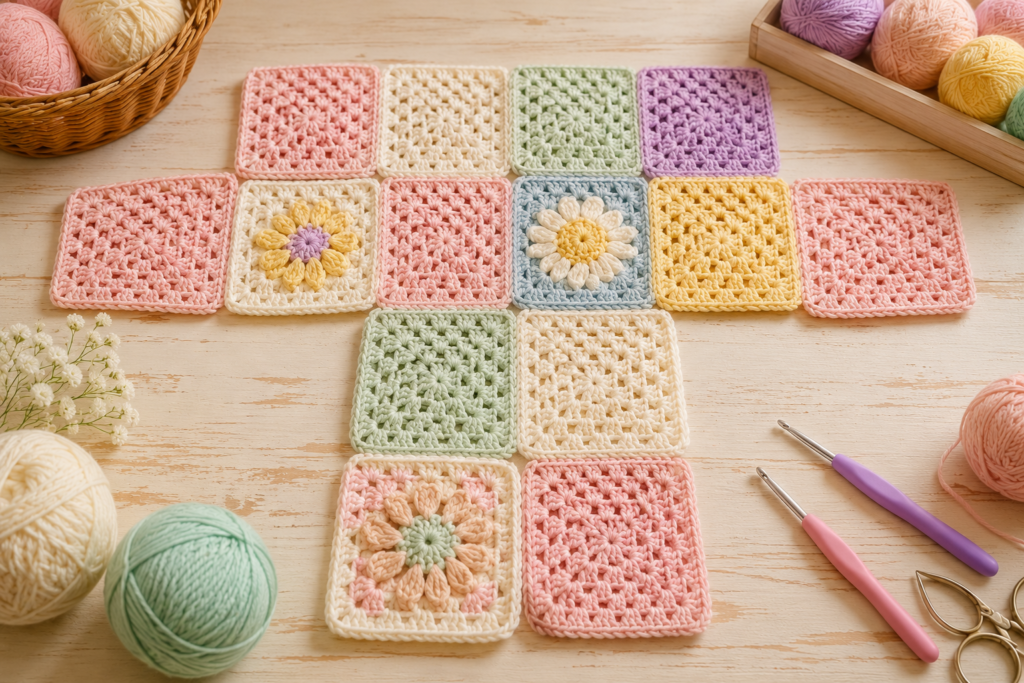
If a full sweater feels intimidating, start with a sleeveless vest.
A granny-square vest is easier to construct and can be layered over a long-sleeve bodysuit.
Difficulty: Beginner to intermediate
30. Scrap-Yarn Baby Cardigan
This is one of my favorite ideas for crocheters with leftover yarn.
Choose approximately six to eight colors and repeat them throughout the garment.
For an organized look, use the same color for the outer round of every square.
Difficulty: Intermediate
31. Personalized Baby Crochet Cardigan
Turn a basic cardigan into a keepsake.
Consider adding:
- Initials
- Hearts
- Flowers
- Stars
- Animal motifs
- A favorite color combination
A simple cardigan can become much more meaningful with one personalized detail.
Difficulty: Beginner to intermediate
How to Choose the Right Yarn for a Baby Sweater
Yarn selection matters even more for baby garments than it does for many decorative crochet projects.
You want something that is:
- Soft
- Comfortable
- Washable
- Durable
- Appropriate for the intended season
- Easy to work with
Good options include:
Cotton: Great for warmer weather and lightweight garments.
Acrylic: Affordable, widely available and often easy to wash.
Cotton-acrylic blend: A useful compromise between softness, durability and easy care.
Bamboo blends: Can create a soft, lightweight fabric.
Soft wool: Can be appropriate for colder-weather garments, provided the recipient is comfortable with the fiber and care requirements.
Always check the yarn manufacturer’s care instructions.
What Yarn Weight Is Best?
For many baby sweaters, lightweight or medium yarns are easier to work with than very bulky yarn.
A lighter yarn creates a more flexible garment and allows you to make comfortable stitches without producing excessive thickness.
However, the ideal yarn weight depends on:
- Pattern
- Season
- Desired drape
- Hook size
- Garment size
Don’t choose the yarn solely because it looks cute in the store.
Check the recommended yarn weight and gauge for your pattern first.
How Much Yarn Do You Need?
There is no single amount that works for every baby sweater.
Yarn consumption changes according to:
- Baby’s size
- Yarn weight
- Hook size
- Stitch pattern
- Sweater length
- Sleeve length
- Hood
- Granny-square size
- Color changes
A useful approach is to buy enough yarn for the project plus a little extra, especially when using a specific dye lot.
For multicolor projects, calculate each color separately rather than assuming you’ll use equal amounts of every shade.
Baby Sweater Size: Don’t Rely Only on Age
This is one of the most important tips in the entire article.
A label such as “6–12 months” is only a general guide.
Babies vary significantly in size.
Whenever possible, measure the intended wearer or compare your project with a well-fitting garment.
The most useful measurements include:
- Chest circumference
- Shoulder width
- Garment length
- Sleeve length
- Armhole depth
- Neck opening
General Baby Measurement Reference
| Approximate age | Typical chest range* | Best approach |
|---|---|---|
| 0–3 months | 40–45 cm | Measure whenever possible |
| 3–6 months | 43–48 cm | Check actual measurements |
| 6–12 months | 45–50 cm | Compare with baby’s clothing |
| 12–18 months | 48–53 cm | Measure for better accuracy |
| 18–24 months | 50–55 cm | Check actual chest size |
*These are only general reference ranges, not guaranteed garment measurements.
For an actual project, your gauge and the pattern’s finished measurements should take priority.
What Is Crochet Ease?
Ease is the difference between the wearer’s body measurement and the finished garment measurement.
For example, if the baby’s chest measures:
46 cm
and the finished sweater measures:
50 cm
then the sweater has approximately:
4 cm of positive ease.
A little positive ease can make a sweater more comfortable and easier to layer.
Don’t add large amounts of extra fabric simply because it’s a baby garment.
Why Gauge Matters So Much
Imagine your pattern says:
18 stitches = 10 cm
but your crochet produces:
21 stitches = 10 cm.
Your finished sweater could end up noticeably smaller.
That’s why a gauge swatch isn’t wasted yarn—it is part of the pattern.
Make your swatch using:
- The same yarn
- The same hook
- The same stitch
- The same tension you plan to use
Then measure the center of the swatch rather than relying only on its edges.
What If Your Gauge Is Wrong?
Too many stitches?
Your stitches are smaller than the pattern’s.
Try a larger hook.
Too few stitches?
Your stitches are larger than the pattern’s.
Try a smaller hook.
Repeat the swatch until your gauge is reasonably close.
Three Beginner-Friendly Construction Methods
Method 1: Top-Down
You begin at the neckline and work toward the bottom.
Advantages
- Fewer seams
- Easy to modify
- Easy to check length
- Excellent for growing children
Difficulty
Beginner to intermediate
Method 2: Granny-Square Construction
Create individual squares and join them.
Advantages
- Great for colorful designs
- Perfect for leftover yarn
- Easy to customize
- Visually interesting
Disadvantage
There can be many seams to finish.
Difficulty: Beginner to intermediate
Method 3: Separate Panels
Make:
- Back
- Front
- Sleeves
Then sew or crochet them together.
Advantages
- Straightforward construction
- Easy to understand
- Good for beginners learning garment assembly
Difficulty: Beginner
Easy Granny-Square Pattern Formula
If you’re already comfortable with granny squares, you can adapt the classic construction into baby garments.
A traditional granny square is generally built from repeating groups of double crochet stitches separated by chain spaces.
Basic concept
Round 1: Create the center.
Round 2: Work clusters into the spaces created previously.
Round 3+: Continue adding clusters while creating four corners.
Every new round increases the square’s overall size.
The exact stitch count, hook size and number of rounds depend on your chosen yarn and desired finished measurements.
For a garment, do not rely on a generic square count. Measure the finished squares and calculate how many are needed for the intended size.
How to Calculate the Number of Granny Squares
This is much better than simply saying “make 20 squares.”
Suppose your desired back width is:
30 cm
and your finished granny square measures:
7.5 cm
Then:
30 ÷ 7.5 = 4
So you need approximately:
4 squares across
If the desired back length is:
30 cm
you would again need approximately:
4 squares vertically.
That creates approximately:
4 × 4 = 16 squares
for that section.
Your actual cardigan will require additional squares for the fronts and sleeves.
How to Make a Granny-Square Cardigan Look More Professional
The secret isn’t necessarily complicated crochet.
It’s consistency.
Try these techniques:
Keep your squares the same size
Even a few millimeters of difference can make joining difficult.
Use the same border color
This instantly creates a more cohesive design.
Block the squares
Blocking can help straighten edges and make the motifs easier to assemble.
Plan the layout first
Place all the squares on a flat surface before joining.
Move colors around until the distribution looks balanced.
Video Tutorial: How to Crochet a Baby Cardigan
Prefer to learn by watching? This step-by-step tutorial shows how to crochet a baby cardigan from start to finish, making it a helpful visual guide if you’re new to crochet garments or want to follow along while working on your own project.
Watch the tutorial below and crochet along at your own pace.
Note: This video demonstrates one specific cardigan design, so the yarn, sizing and construction may differ from some of the 31 ideas featured in this article.
How to Plan Colors Like a Crochet Designer
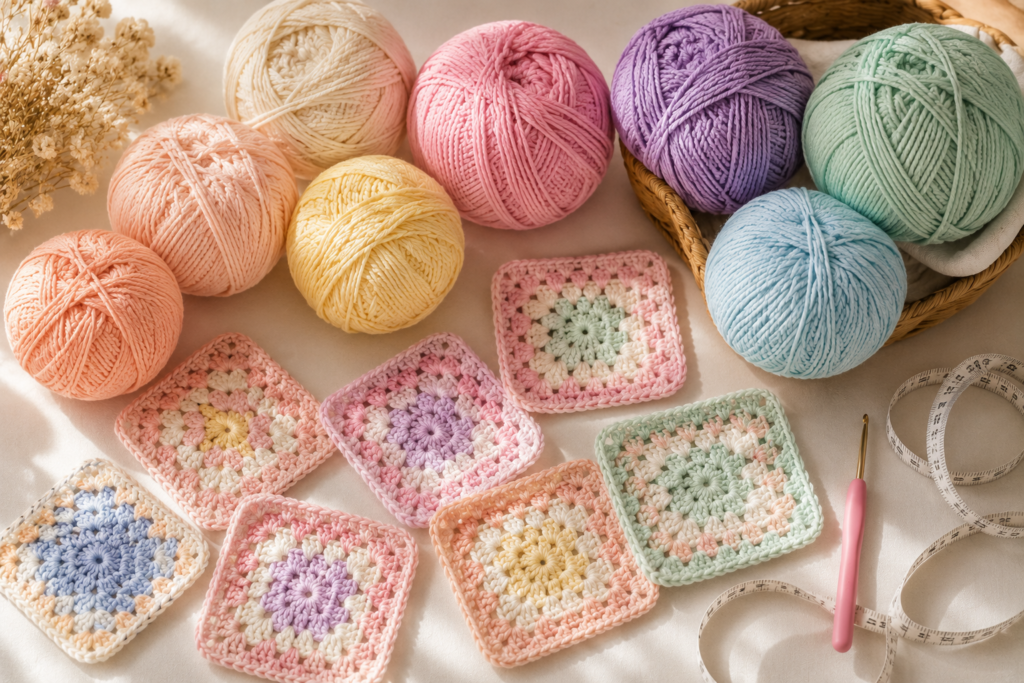
One of the easiest mistakes is using too many colors without a plan.
Try the 60–30–10 rule.
60%
Your dominant color.
Example:
Cream
30%
Secondary colors.
Example:
Pink + lavender
10%
Accent colors.
Example:
Bright raspberry
This gives a colorful cardigan a much more intentional appearance.
Beautiful Baby Crochet Color Palettes
Soft Pink
Pink + cream + white + raspberry
Pastel Rainbow
Pink + lavender + mint + yellow + baby blue + cream
Vintage
Dusty rose + mustard + sage + cream
Playful
Pink + orange + yellow + lavender + mint
Neutral
Cream + oatmeal + beige + soft brown
Fresh Spring
Mint + white + lemon yellow + blush
How to Make a Sweater From Leftover Yarn
Don’t throw away small balls of leftover yarn.
Baby garments are perfect for using them.
Sort your yarn into:
Warm colors
and
Cool colors
Then choose one dominant shade to connect everything.
For example:
Cream as the border + colorful centers
is one of the easiest ways to make different leftover yarns work together.
How to Adapt a Pattern for a Different Size
If you’ve found a beautiful baby sweater pattern but it isn’t available in the size you need, don’t simply increase every stitch randomly.
Instead, understand the construction.
For a simple panel
Increase the width gradually until the finished measurement matches your target.
For granny squares
Change the number of squares or the size of each square.
For top-down sweaters
Adjust the increase section before separating the sleeves and body.
For sleeves
Measure the baby’s arm or compare with a well-fitting garment.
This is why understanding gauge + measurements + construction is more useful than memorizing a single stitch count.
How to Fix a Baby Sweater That Is Too Small
If your finished garment is too small, first determine where the problem is.
Body too narrow
Add additional width through side panels or modify the construction before finishing.
Sleeves too short
Add additional rounds.
Body too short
Add additional rounds to the lower edge.
Neck too tight
This is more difficult to fix cleanly, so it’s best to check the neckline early in the project.
How to Finish a Crochet Baby Sweater
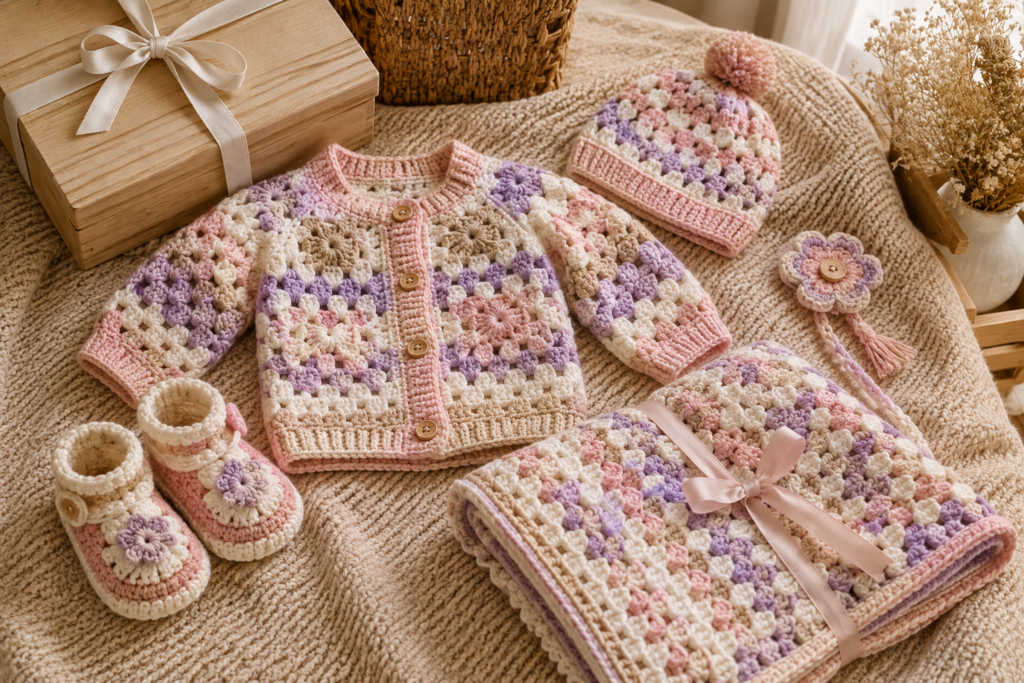
Finishing can completely change the appearance of a handmade garment.
Pay attention to:
Cuffs
A simple ribbed-looking edge gives structure.
Neckline
Keep it neat and comfortable.
Hem
Use a consistent border around the entire garment.
Seams
Hide yarn ends carefully and securely.
Blocking
Block pieces before final assembly when appropriate for your yarn and stitch pattern.
Baby Garment Safety: Important Considerations
When crocheting for babies, appearance isn’t the only consideration.
Secure decorative elements
Small removable pieces can pose a hazard.
Check buttons
Attach buttons extremely securely and inspect them regularly.
Avoid loose cords
Long loose ties and cords are not appropriate for baby clothing.
Choose suitable yarn
The finished fabric should be comfortable against delicate skin.
Follow yarn care instructions
Parents should know how the finished garment should be washed and dried.
When in doubt, keep baby garments simple, secure and easy to wash.
5 Mistakes Beginners Should Avoid
1. Skipping the gauge swatch
This is the fastest way to end up with the wrong size.
2. Choosing yarn only by color
The prettiest yarn isn’t necessarily suitable for baby clothing.
3. Making every square a different size
Consistent motifs make assembly much easier.
4. Adding too many embellishments
A baby garment doesn’t need dozens of decorative elements.
5. Waiting until the end to check the fit
Measure during construction whenever possible.
Which Baby Crochet Sweater Is Best for Beginners?
If this is your first crochet garment, I recommend starting in this order:
1. Simple striped pullover
The easiest introduction to garment construction.
2. Basic cardigan
Excellent for learning panels and finishing.
3. Granny-square cardigan
Perfect once you’re comfortable joining motifs.
4. Top-down raglan
A great next step for learning shaping.
5. Patchwork cardigan
Best once you’re comfortable with planning colors and joining.
A Simple Beginner Project Plan
If you’re completely new to baby crochet garments, here’s a practical progression.
Project 1
Make a small granny square.
Project 2
Make several identical granny squares.
Project 3
Practice joining them.
Project 4
Make a baby vest.
Project 5
Move on to a cardigan.
Project 6
Try sleeves and more complicated shaping.
This approach is much less frustrating than starting with an advanced sweater.
How to Turn These Ideas Into a Baby Shower Gift
A handmade cardigan becomes even more special when paired with a few small crochet accessories.
Consider making:
- Baby cardigan
- Matching bonnet
- Crochet booties
- Baby hat
- Small blanket
- Headband
- Soft nursery decoration
Choose one color palette and repeat it throughout the set.
For example:
Blush pink + cream + lavender
can be used for every item.
FAQ
What is the easiest crochet baby sweater for beginners?
A simple striped pullover or basic cardigan using single crochet, half double crochet or double crochet is usually easier than a heavily shaped or patchwork design.
How much yarn do I need for a crochet baby cardigan?
It depends on the baby’s size, yarn weight, stitch pattern, sleeve length and construction. Always check the specific pattern’s yarn requirements and buy a little extra when possible.
Are granny-square baby cardigans difficult?
They can be very beginner-friendly if you already know how to make granny squares. The more challenging part is usually planning the layout and joining the pieces neatly.
What crochet stitch is best for baby sweaters?
There isn’t one universally best stitch. Simple stitches such as single crochet, half double crochet and double crochet can all work well when matched with suitable yarn and gauge.
How do I make a crochet baby sweater bigger?
Depending on the construction, you can increase the number of stitches, add rounds, use larger motifs, increase the number of granny squares or modify the garment panels.
Can I use leftover yarn for a baby cardigan?
Absolutely. Granny-square and patchwork designs are particularly well suited to scrap yarn. Using one consistent border color helps create a coordinated appearance.
What size crochet hook should I use?
Use the hook recommended for your yarn or pattern as a starting point, then adjust according to your gauge swatch.
Final Thoughts
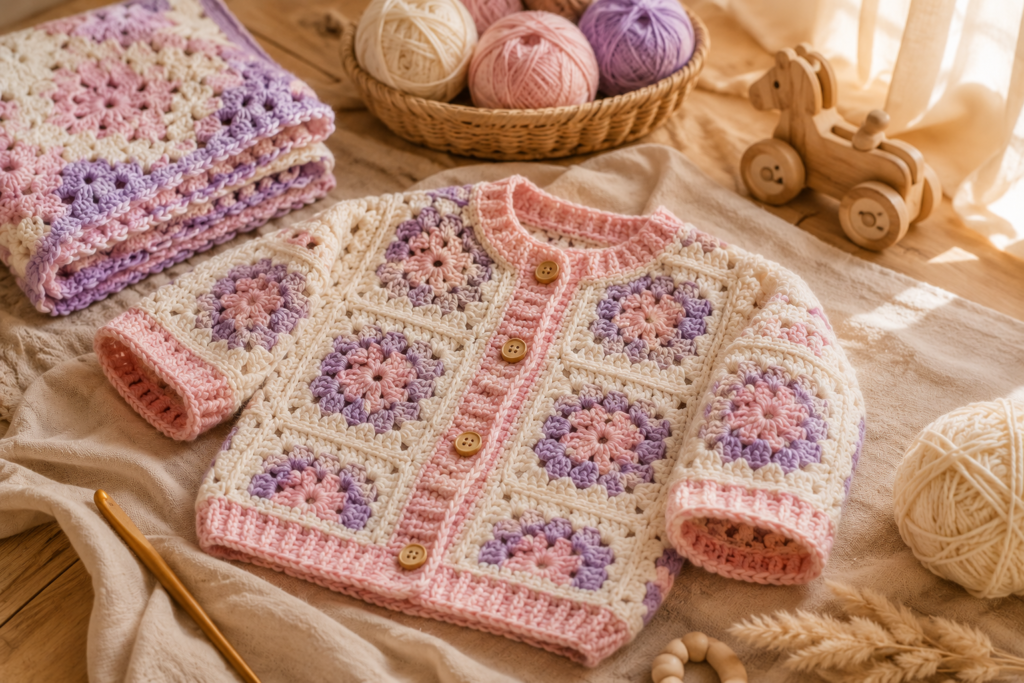
The beauty of crochet baby sweaters is that there is no single style you have to follow.
You can keep things simple with a striped pullover, create a vintage-inspired granny-square cardigan, experiment with bright patchwork, or personalize a basic sweater with flowers, hearts or initials.
If you’re a beginner, start with construction rather than decoration. Once you understand gauge, measurements and basic garment shaping, you can change the colors, motifs and finishing details to create almost endless designs.
And if you’re making a cardigan as a gift, remember that the prettiest project isn’t necessarily the best one. A successful baby garment should be soft, comfortable, practical, washable and securely finished.
Start with one simple design, choose a beautiful color palette, make your gauge swatch, and enjoy the process of creating something handmade for a little one.
More Crochet Baby Ideas to Try
If you enjoyed these crochet baby sweater ideas, you may also like:
- 21 Crochet Skirt Shapes for Beginners to Try
- 21 Crochet Spider Web Bandana Ideas THAT Will Transform Your Halloween Look
- 23 Crochet Halloween Cardigan Ideas, Patterns & Tutorials
- 23 Crochet Butterfly Cardigan Ideas, Patterns & Tutorials