Modern life moves fast. Between work, screens, stress, poor sleep, emotional exhaustion, and nonstop responsibilities, many people have become so used to feeling “off” that they no longer recognize when their body is asking for help.
Constant fatigue becomes normal. Brain fog gets ignored. Dry skin is covered with skincare products. Mood swings are blamed on stress. Low energy is pushed aside with caffeine.
But the truth is this: your body communicates with you every single day.
In 2026, wellness conversations are shifting away from extreme perfection and moving toward something more sustainable and realistic — listening to your body before burnout happens.
The body often gives small warning signs when it needs rest, nourishment, hydration, movement, or emotional recovery. While no single symptom automatically means something serious, paying attention to recurring patterns can help people build healthier routines and better long-term wellness habits.
This guide explores five common signs that may indicate your body needs more self-care, along with nourishing foods and supportive wellness habits that may help you feel more balanced, energized, and restored naturally.
Why Self-Care Is More Important Than Ever in 2026

Self-care is no longer viewed as luxury. It’s increasingly recognized as part of overall wellness.
Modern lifestyles often include:
- Chronic stress
- Poor sleep quality
- Long screen time
- Ultra-processed foods
- Mental overload
- Limited movement
- Constant stimulation
Over time, these habits can affect both physical and emotional wellbeing.
Today’s wellness movement focuses more on:
- Restorative habits
- Holistic health
- Nervous system regulation
- Nutrient-rich foods
- Emotional balance
- Sustainable routines
The goal is not perfection. The goal is recovery, balance, and resilience.
1. You’re Constantly Tired — Even After Sleeping
One of the most common signs your body may need more support is persistent fatigue.
Many people sleep for hours but still wake up feeling exhausted, sluggish, or mentally drained.
Possible Lifestyle Factors Behind Low Energy
- Poor sleep quality
- Stress overload
- Dehydration
- Irregular meals
- Lack of nutrient-dense foods
- Excessive caffeine
- Mental burnout
Low energy doesn’t always mean laziness. Sometimes it’s the body signaling exhaustion.
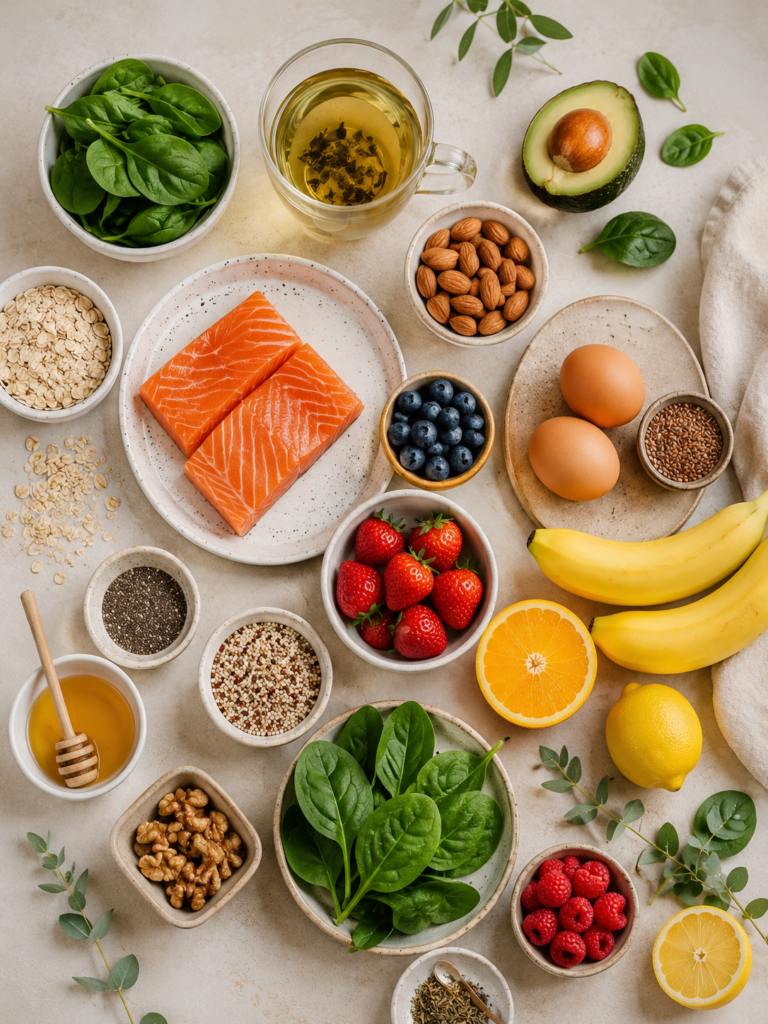
Foods That May Help Support Energy
Eggs
Rich in protein and important nutrients that support steady energy.
Spinach
Contains iron and plant nutrients linked to overall wellness.
Oats
Provide slow-releasing carbohydrates for stable energy levels.
Bananas
Contain carbohydrates and potassium often associated with energy support.
Salmon
Provides protein and healthy fats important for overall health.
Self-Care Habits That May Help
- Improve sleep routines
- Drink more water
- Eat balanced meals regularly
- Reduce late-night screen exposure
- Take breaks during stressful days
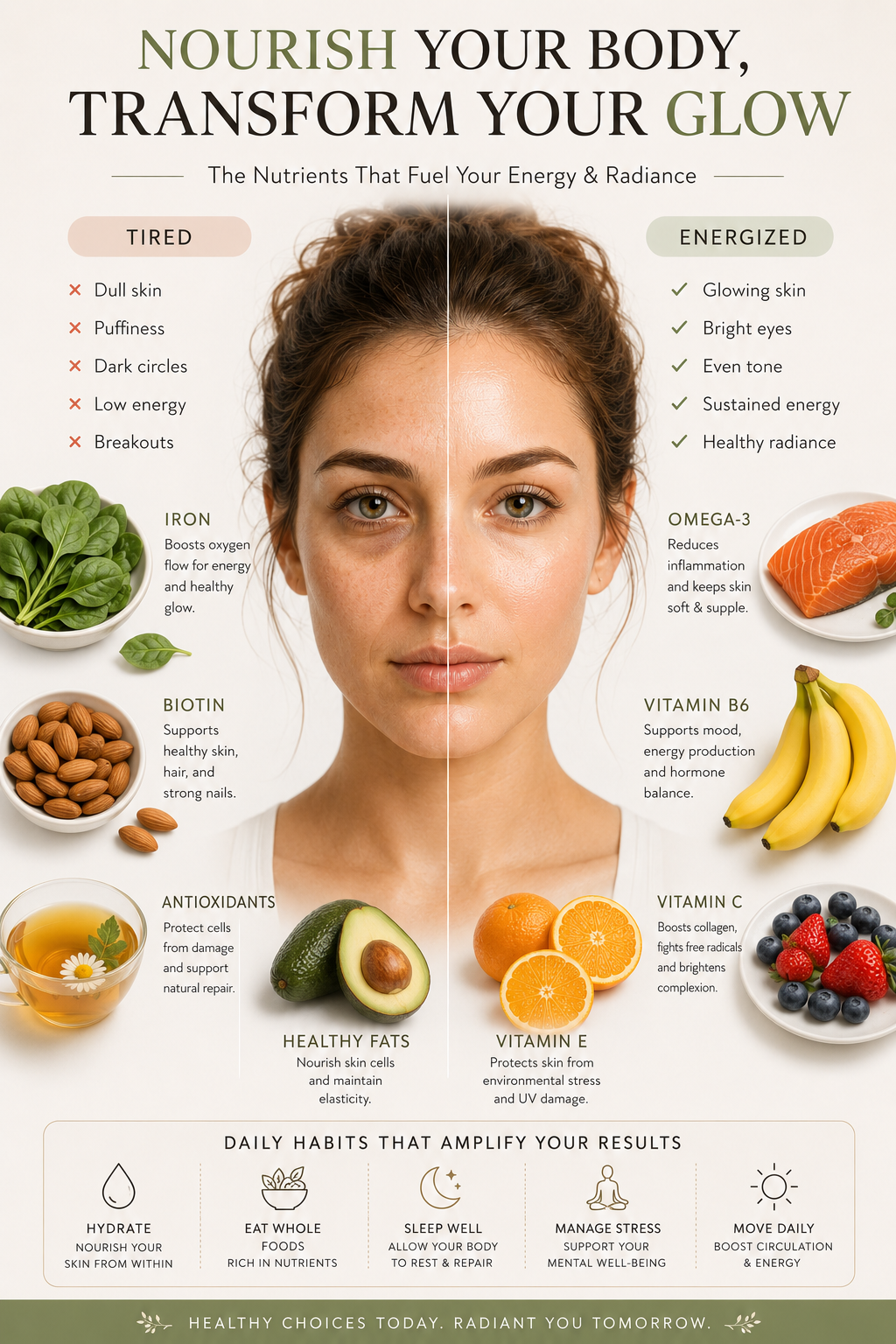
2. Your Skin Looks Dull, Dry, or Tired
Your skin often reflects what’s happening internally.
Stress, dehydration, lack of sleep, and poor nutrition may all affect skin appearance over time.
Common Signs
- Dryness
- Dull complexion
- Dark circles
- Increased sensitivity
- Tired appearance
Healthy-looking skin is influenced by much more than skincare products alone.
Foods That Support Skin Wellness
Avocados
Contain healthy fats that help support skin hydration.
Oranges
Rich in vitamin C, which supports collagen production.
Berries
Contain antioxidants associated with skin protection.
Nuts and Seeds
Provide healthy fats and nutrients important for skin health.
Cucumbers
Help support hydration.
Self-Care Habits for Skin Wellness

- Sleep consistently
- Stay hydrated
- Manage stress levels
- Avoid excessive sugar intake
- Spend time outdoors
3. You Feel Emotionally Drained or Irritable
Emotional exhaustion is becoming increasingly common in modern life.
Many people push themselves mentally for so long that their nervous system never fully relaxes.
Signs of Emotional Burnout
- Irritability
- Feeling overwhelmed
- Lack of motivation
- Constant mental fatigue
- Emotional numbness
- Anxiety or tension
The body and mind are deeply connected. Emotional stress can affect sleep, digestion, appetite, and physical energy.
Foods That May Support Mood and Nervous System Health
Dark Chocolate
Contains magnesium and compounds linked to mood support.
Almonds
Provide healthy fats and magnesium.
Fatty Fish
Contain omega-3 fatty acids associated with brain health.
Leafy Greens
Rich in nutrients important for overall wellness.
Herbal Teas
Can support calming routines and relaxation habits.
Emotional Self-Care Practices
- Rest without guilt
- Reduce overstimulation
- Journal or reflect
- Spend time in nature
- Create screen-free moments
- Set healthier boundaries
4. Your Body Feels Stiff, Heavy, or Run Down
Physical tension can build up when the body lacks movement, recovery, hydration, or adequate rest.
Many people today spend hours sitting, scrolling, or working under stress.
Common Signs
- Muscle tightness
- Poor posture
- Headaches
- Low physical motivation
- Feeling physically “heavy”
The body often responds positively to gentle movement and better recovery habits.
Foods That Support Physical Wellness
Greek Yogurt
Contains protein important for muscle maintenance.
Sweet Potatoes
Provide carbohydrates and nutrients linked to recovery support.
Watermelon
Supports hydration.
Leafy Greens
Contain important minerals for overall body function.
Chia Seeds
Provide fiber and healthy fats.
Recovery-Focused Self-Care Habits
- Stretch daily
- Walk regularly
- Improve posture
- Stay hydrated
- Avoid excessive sedentary time
- Prioritize recovery days
5. You’re Craving Sugar, Caffeine, or Junk Food Constantly

Frequent cravings may sometimes be linked to stress, poor sleep, irregular eating habits, or emotional exhaustion.
When the body feels depleted, people often seek quick energy sources.
Why Cravings Happen
- Energy crashes
- Poor meal balance
- Emotional stress
- Sleep deprivation
- Blood sugar fluctuations
Restrictive habits can sometimes worsen cravings instead of helping them.
Foods That May Help Create Better Balance
Protein-Rich Meals
Help support fullness and stable energy.
Whole Fruits
Provide natural sweetness with fiber.
Nuts
Support satiety and balanced snacking.
Oats
Provide longer-lasting energy.
Water-Rich Foods
Hydration can sometimes reduce unnecessary snacking.
Self-Care Habits for Better Eating Patterns
- Eat consistently
- Avoid skipping meals
- Sleep enough
- Reduce stress eating triggers
- Practice mindful eating
The Connection Between Nutrition and Self-Care
Self-care is not only about spa days or beauty routines.
True self-care often includes:
- Nourishing the body properly
- Resting consistently
- Managing stress
- Hydrating adequately
- Creating sustainable routines
- Protecting mental wellbeing
Nutrition and lifestyle habits work together to influence:
- Energy
- Skin appearance
- Mood
- Sleep quality
- Recovery
- Overall wellness
Why Wellness Content Is Going Viral in 2026
People are becoming increasingly interested in:
- Holistic health
- Burnout recovery
- Nervous system regulation
- Healthy habits
- Emotional wellness
- Natural energy support
- Wellness-focused lifestyles
Pinterest and social media users actively search for:
- Self-care routines
- Foods for energy
- Wellness tips
- Healthy habits
- Burnout signs
- Glow-up routines
This type of educational wellness content performs extremely well because it feels relatable, practical, and emotionally supportive.
Important Reminder About Health Information
Symptoms like fatigue, mood changes, cravings, or skin concerns can have many possible causes.
Online wellness content should never replace medical advice or professional diagnosis.
If symptoms are persistent, severe, or concerning, consulting a qualified healthcare professional is important.
Wellness content is most helpful when used as supportive lifestyle education rather than self-diagnosis.
Small Self-Care Habits That Can Make a Big Difference
You don’t need a perfect routine to support your wellbeing.
Small consistent habits matter most.
Simple Daily Self-Care Ideas
- Drink more water
- Eat balanced meals
- Get sunlight exposure
- Sleep consistently
- Walk daily
- Reduce screen overload
- Stretch regularly
- Spend time offline
- Practice mindfulness
Sustainable habits usually work better than extreme routines.
Conclusion: Your Body Is Always Communicating With You
The body often gives subtle signals before burnout becomes overwhelming.
Low energy, dull skin, emotional exhaustion, physical tension, and constant cravings may all be signs that your body needs more support, nourishment, and recovery.
Self-care is not selfish. It’s one of the foundations of long-term wellbeing.
In 2026, wellness is no longer about perfection or unrealistic routines. It’s about learning how to listen to your body, support your mental and physical health, and create habits that help you feel stronger, calmer, and more balanced over time.
Because sometimes the most important thing you can do is pause long enough to notice what your body has been trying to tell you all along.