
Your skin looks dull. Your eyes seem constantly tired. Dark circles won’t disappear no matter how much you sleep. Your lips feel dry, your hair loses shine, and your face simply doesn’t look as healthy as it once did.
Most people assume these changes are caused only by stress, lack of sleep, or aging. But in many cases, your face may actually be reflecting something deeper happening inside your body: nutrient deficiencies.
In 2026, interest in wellness, functional nutrition, and preventative health has exploded across social media and search engines. More people are discovering that chronic fatigue, dull skin, poor focus, low energy, and mood changes are sometimes connected to deficiencies in essential vitamins and minerals like iron, vitamin B12, magnesium, vitamin D, and vitamin C.
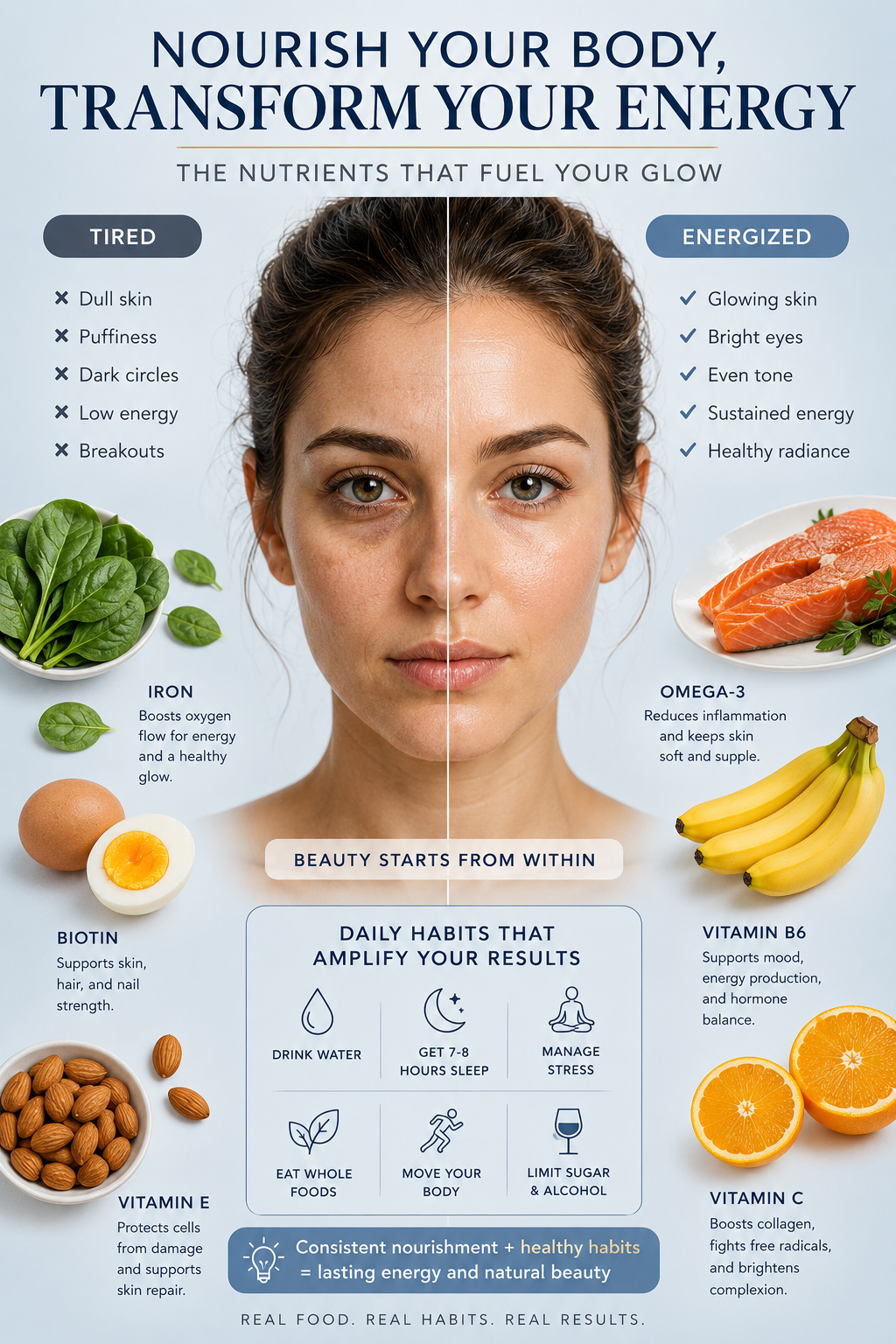
The infographic above highlights an important concept: your body often sends visible signals when it lacks key nutrients.
While facial appearance alone cannot diagnose medical conditions, certain physical signs may suggest nutritional imbalances worth paying attention to.
In this complete guide, we’ll explore how nutrient deficiencies can affect your appearance and energy levels, explain the role of important vitamins and minerals, discuss foods that support overall wellness, and help you understand how nutrition impacts both health and appearance in 2026.
Why Your Face Reflects Your Internal Health
Your body prioritizes essential functions like organ support, circulation, and immune defense before cosmetic appearance.
When the body lacks important nutrients, some of the first visible changes may appear in:
- Skin quality
- Eye brightness
- Hair health
- Lip hydration
- Facial color
- Energy expression
This is why people often say someone “looks tired” even before that person notices symptoms themselves.
Your face can reflect:
- Poor sleep
- Dehydration
- Stress
- Fatigue
- Inflammation
- Nutritional imbalance
Modern wellness research increasingly emphasizes the connection between nutrition and external appearance.
Common Signs That May Be Linked to Nutrient Deficiencies

While symptoms vary between individuals, some commonly discussed signs include:
- Persistent fatigue
- Pale or dull skin
- Dark circles under eyes
- Hair thinning
- Brittle nails
- Dry lips
- Muscle weakness
- Brain fog
- Mood changes
- Low motivation
These symptoms do not automatically mean deficiency, but they may suggest the body needs better nutritional support.
Iron Deficiency and Chronic Fatigue
Iron is one of the most commonly discussed nutrient deficiencies worldwide.
The infographic highlights spinach as an iron-rich food because iron plays a major role in oxygen transport within the body.
Why Iron Matters
Iron helps red blood cells carry oxygen efficiently.
Low iron levels may contribute to:
- Tiredness
- Weakness
- Pale appearance
- Dizziness
- Poor concentration
Iron-Rich Foods
- Spinach
- Lentils
- Red meat
- Beans
- Pumpkin seeds
- Tofu
Vitamin C can help improve iron absorption, which is why citrus fruits are often paired with iron-rich foods.
Vitamin B12 and Energy Support
Vitamin B12 is essential for nerve function and energy metabolism.
The infographic references eggs because they contain important nutrients including B12.
Why B12 Matters
Low B12 intake may sometimes contribute to:
- Fatigue
- Weakness
- Brain fog
- Mood changes
- Tingling sensations
Foods Rich in Vitamin B12
- Eggs
- Fish
- Dairy products
- Meat
- Fortified cereals
People following restrictive diets may need to pay closer attention to B12 intake.
Magnesium and Muscle Recovery
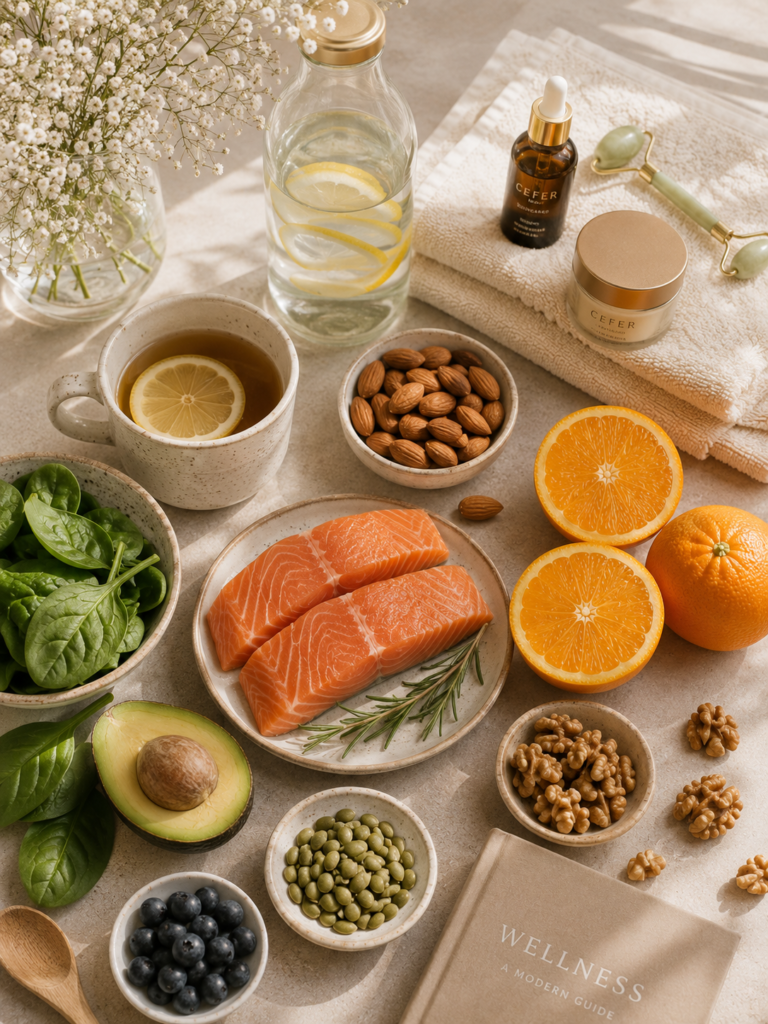
Magnesium plays a role in hundreds of bodily functions, including muscle support and sleep quality.
Many people today consume less magnesium than recommended due to highly processed diets.
Why Magnesium Matters
Magnesium helps support:
- Muscle relaxation
- Sleep quality
- Stress management
- Nervous system function
Magnesium-Rich Foods
- Almonds
- Pumpkin seeds
- Spinach
- Dark chocolate
- Avocados
Poor sleep and stress can also increase magnesium demands in the body.
Vitamin D and Mood Support
Vitamin D has become one of the most discussed wellness nutrients in recent years.
The infographic mentions salmon because fatty fish are among the best dietary sources of vitamin D.
Why Vitamin D Matters
Vitamin D helps support:
- Bone health
- Immune function
- Mood regulation
- Energy levels
Low vitamin D levels are relatively common, especially among people with limited sun exposure.
Vitamin D Sources
- Salmon
- Sardines
- Egg yolks
- Fortified dairy products
- Safe sunlight exposure
Vitamin C and Skin Vitality
Vitamin C plays an important role in collagen production and immune support.
Citrus fruits like oranges are often associated with brighter, healthier-looking skin.
Why Vitamin C Matters
Vitamin C helps support:
- Collagen formation
- Iron absorption
- Skin health
- Immune defense
Vitamin C-Rich Foods
- Oranges
- Strawberries
- Kiwi
- Bell peppers
- Broccoli
A nutrient-rich diet can contribute to healthier-looking skin over time.
The Link Between Nutrition and Skin Appearance
Healthy skin depends on many factors, including:
- Hydration
- Sleep
- Stress management
- Hormonal balance
- Nutrition
Modern skincare increasingly focuses not only on topical products but also on internal wellness and dietary support.
A balanced diet rich in vitamins, minerals, antioxidants, and healthy fats may help support:
- Skin elasticity
- Glow
- Hydration
- Reduced inflammation
Why Energy Levels Matter for Facial Appearance

One major reason fatigue changes appearance is because low energy affects:
- Eye brightness
- Facial tension
- Skin circulation
- Posture
- Expression
People who sleep poorly or feel chronically exhausted often appear less vibrant even if they use skincare products.
This is why wellness trends increasingly emphasize holistic health rather than cosmetic fixes alone.
Lifestyle Habits That Support Better Energy and Appearance
1. Prioritize Sleep
Sleep strongly influences skin repair and energy recovery.
2. Stay Hydrated
Dehydration affects skin texture and facial brightness quickly.
3. Eat Balanced Meals
Whole foods provide essential nutrients the body needs.
4. Reduce Ultra-Processed Foods
Highly processed diets may contribute to inflammation and fatigue.
5. Move Regularly
Exercise supports circulation and energy levels.
6. Manage Stress
Chronic stress affects both appearance and overall wellness.
Why Wellness Content Is Going Viral in 2026
Health-focused visual content performs extremely well online because people are increasingly interested in:
- Natural wellness
- Functional nutrition
- Holistic beauty
- Energy optimization
- Preventative health
Pinterest and social media users actively search for:
- Vitamin deficiency signs
- Foods for energy
- Skin health tips
- Healthy lifestyle habits
- Natural wellness advice
This type of educational wellness content is highly shareable because it combines visual simplicity with practical information.
Important Reminder About Self-Diagnosis
Although nutrition strongly affects overall wellness, symptoms like fatigue or skin changes can have many possible causes.
Online information should never replace professional medical evaluation.
If someone experiences persistent symptoms such as severe fatigue, dizziness, unexplained weakness, or ongoing health concerns, consulting a qualified healthcare professional is important.
Laboratory testing may be necessary to confirm whether deficiencies are present.
How to Build a Nutrient-Rich Daily Routine
A wellness-focused lifestyle doesn’t require perfection. Small consistent habits matter most.
Simple Daily Wellness Habits
- Eat protein-rich breakfasts
- Include colorful vegetables
- Prioritize healthy fats
- Drink enough water
- Get regular movement
- Spend time outdoors
- Maintain consistent sleep schedules
These habits support both energy and long-term wellness.
Conclusion: Your Body Often Speaks Before You Realize It
Your appearance can sometimes provide subtle clues about what’s happening inside your body.
While tired eyes, dull skin, low energy, and fatigue may have many causes, nutrition plays an important role in overall wellness and how we feel every day.
Iron, magnesium, vitamin D, vitamin B12, and vitamin C all contribute to important bodily functions connected to energy, skin health, mood, and recovery.
In 2026, wellness is no longer only about looking healthy — it’s about building sustainable habits that support the body from the inside out.
Because true vitality is not just something you see in the mirror.
It’s something you feel every day.